
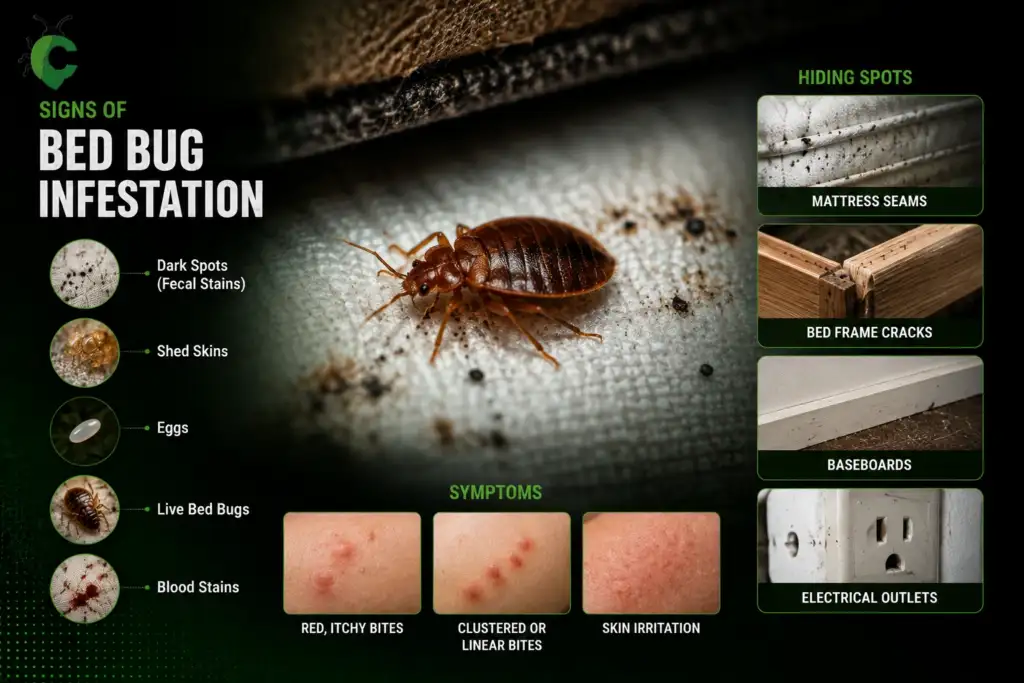
- Early signs bedbugs produce include rusty blood stains, dark fecal spots, shed skins, and live bugs.
- Bites appear as itchy welts in lines or clusters. 30% of people show no reaction.
- Bed bugs hide in mattress seams, box springs, bed frames, and cracks within 8 feet of the bed.
- Confirm infestations by inspecting these areas with a flashlight. Bite marks alone do not verify an infestation.
- Early detection reduces treatment cost and prevents spread to other rooms.
Introduction
Bed bug signs include rusty blood stains on sheets, dark fecal spots along mattress seams, shed exoskeletons, and a sweet musty odor. Bites appear as itchy red welts in lines or clusters on exposed skin. Signs of bedbugs often confuse homeowners because 30% of people show no visible reaction. An infestation requires physical evidence of Cimex lectularius for confirmation. Bite marks alone do not verify an infestation.
Unexplained bites trigger anxiety about hidden pests. You need clear identification criteria to stop the cycle of worry and ineffective self-treatment. This guide reveals exact hiding locations, evidence descriptions, and step-by-step bedroom inspection methods. You will learn to distinguish bed bug evidence from similar pests and confirm an infestation before it spreads.
What Do Bed Bug Bites Look Like?
Bed bug bites manifest as small red welts with a darker center, arranged in rough lines or tight clusters. Darker skin tones display bites as subtle dark marks or swelling instead of bright redness. The bites land exclusively on exposed skin areas such as the face, neck, arms, and hands.
Mayo Clinic describes bites as inflamed spots with a darker center, arranged in lines or clusters. CDC confirms bed bugs do not transmit disease. 30% of people show zero visible reaction, and reactions take 1 to 14 days to appear. Allergic dermatitis develops in sensitive individuals. Severe allergic reactions including widespread hives or difficulty breathing require immediate medical care.
Bite Patterns on Different Skin Tones
Lighter skin shows pink or red welts within 24 hours. Darker skin shows subtle marks or swelling. Bed bug bites look like random irritation on deeper skin tones until the pattern clears.
The Breakfast, Lunch, Dinner Pattern
Three or more bites form a rough line on the body. One bug feeds, moves slightly, and feeds again. Bed bug bites in this pattern confirm nocturnal parasitic insect activity rather than random irritation.
- Bites produce itchy red welts with a darker center in most people
- 30% of hosts display zero visible bed bug bite symptoms
- Reactions appear 1 to 14 days after feeding occurs
- Exposed skin on the face, neck, arms, and hands receives all bites
- Allergic dermatitis develops in sensitive individuals with pronounced bed bug symptoms
Early Signs of Bed Bugs on Your Mattress and Sheets
Physical evidence reveals an active infestation before bites appear. Early signs of bedbugs include five distinct categories of trace evidence on sleeping surfaces. Bed bug signs on mattress seams and tags produce the strongest confirmation.
- Rusty or reddish stains on sheets come from crushed bugs after feeding. Bed bug bloodstains appear as small smears near the pillow center. Bed bug blood spots sheets reveal recent crushing during sleep.
- Dark spots measure 1mm and consist of digested blood excrement that bleeds into fabric like marker ink. Bed bug feces cluster in groups of 10 or more along seams. Fecal speckling near tags confirms harborage.
- Pale yellow eggs and eggshells measure 1mm and stick to hidden surfaces. Bed bug eggs on mattress tags indicate recent reproductive activity.
- Shed skins from five nymphal instars accumulate near harborage areas. Bed bug skin shedding appears as translucent hollow replicas near mattress seams. Bed bug shells and bed bug exoskeletons found bed indicate active molting stages.
- Live bugs measure 4 to 5mm, appear mahogany-brown, and resemble apple seeds. Adult Cimex lectularius flattens into narrow cracks when disturbed. Heavy infestations produce a sweet bed bug musty smell near the bed.
How to Spot Bed Bug Fecal Spots
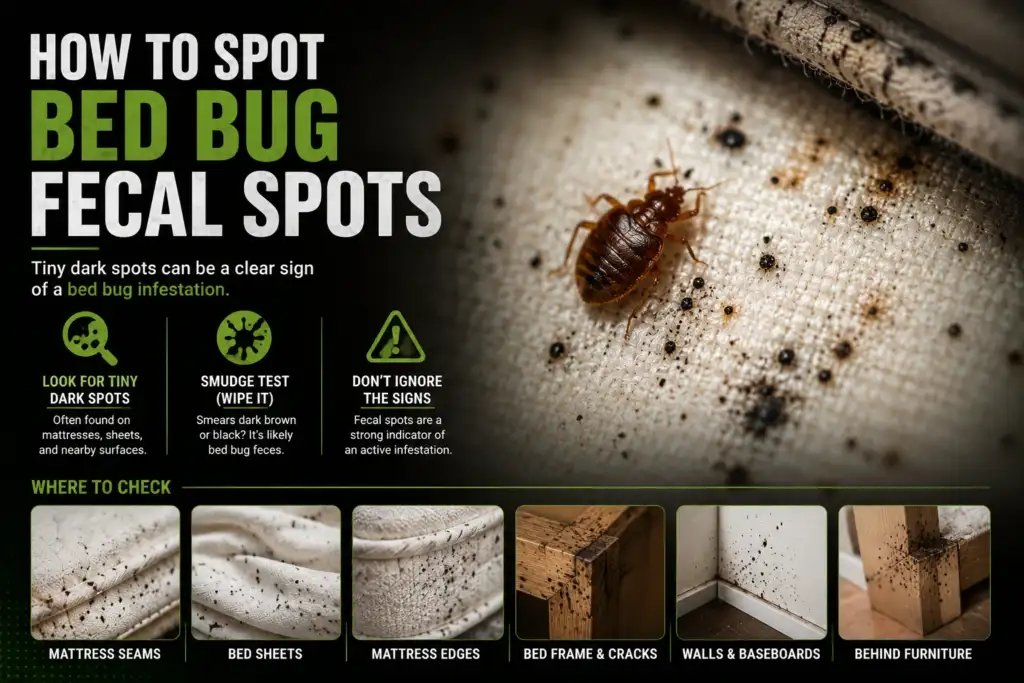
A flashlight inspection of white sheets reveals fecal spots as smooth, ink-like dots that smear when dampened. The texture differs from granular cockroach droppings. Bed bug fecal spots confirm active feeding near that location.
What Bed Bug Eggs Look Like
Pearl-white eggs measure 1mm. Females cement them to cracks and crevices. Bed bug eggs look like tiny grains of rice attached to rough fabric surfaces.
What Bed Bug Nymphs Look Like
Nymphs measure 1 to 4mm depending on the instar. First instar nymphs appear clear with red eyes. Bed bug nymphs look like smaller translucent versions of adults before molting stages complete.
Where Do Bed Bugs Hide During the Day?
Bed bugs remain within 8 feet of human sleep areas. Host-seeking behavior drives these nocturnal parasitic insects toward carbon dioxide and warmth. Homeowners ask where do bedbugs hide during day because the insects seem invisible.
- Mattress seams, tags, and piping host the highest concentrations of Cimex lectularius.
- Box spring corners and fabric staples provide tight harborage areas.
- Bed frame joints, headboard cracks, and screw holes shelter active populations.
- Baseboards, electrical outlet plates, loose wallpaper, and curtain seams serve as secondary locations.
Bedroom Harborage Areas
Cracks within 8 feet of the bed hold the majority of the population. EPA guidance identifies mattress seams and box springs as primary inspection targets. Bed bug hiding places bedroom residents overlook include tag folds and corner pockets.
Secondary Hiding Places Beyond the Bed
Sofas, luggage, closet door frames, and carpet edges harbor traveling bugs. Where do bedbugs hide when populations expand? Secondary rooms receive overflow bugs within 100 feet of the original host.
| Location Type | Examples | Inspection Priority |
| Bedroom Primary | Mattress seams, box springs, bed frames, headboards | High |
| Bedroom Secondary | Baseboards, outlets, wallpaper, curtains | Medium |
| Beyond Bedroom | Sofas, luggage, closet frames, carpet edges | Low |
How to Confirm a Bed Bug Infestation
Bites serve as a poor indicator. Physical evidence confirms the presence of Cimex lectularius. How to confirm bedbugs requires systematic inspection rather than guesswork. How to confirm bed bug infestation follows a five-step protocol.
- Strip all bedding and inspect mattress seams with a flashlight. How to check mattress bedbugs starts with complete stripping.
- Probe box spring corners and bed frame joints with a credit card edge. This exposes hidden bed bug aggregation sites.
- Examine headboard cracks, screw holes, and nearby furniture joints. Secondary furniture within 8 feet requires inspection.
- Look for aggregations containing fecal spots, shed skins, and eggs. Bed bug aggregation confirms established reproduction.
- Install passive monitoring devices or contact a licensed pest professional. Passive monitoring devices capture bugs for 7 to 14 days.
Mattress Seam Inspection
A credit card edge exposes hidden bugs in seams. Black fecal spotting confirms activity. Mattress seam inspection reveals live bugs, eggs, and shed skins compressed between fabric layers. Confirm bed bug presence by finding fecal spots with a flashlight.
When to Call a Professional Exterminator
Persistent bites after inspection or visible evidence warrant professional evaluation. EPA states that early detection costs less and proves easier than treating widespread infestations. University of Tennessee Extension confirms that county agents perform identification services. A bed bug exterminator implements integrated pest management protocols. EPA-approved pesticides carry labels specifying bed bug control. Never apply chemicals to bedding unless the label explicitly permits it. Never apply pesticides to human skin.
Common Bed Bug Myths That Delay Treatment
Misinformation slows response times and allows infestations to spread. Four myths cause particular harm to homeowners.
| Myth | Fact |
| Bed bugs infest only dirty homes | Clean and dirty spaces attract bed bugs equally because blood attracts them, not filth |
| Furniture disposal eliminates the problem | Heat treatment and professional pest management preserve most items |
| Bed bugs spread disease | CDC confirms zero disease transmission through bed bug bites |
| Over-the-counter sprays eradicate infestations | Documented insecticide resistance makes professional thermal remediation more reliable |
Bed bug treatment options include heat, chemical, and integrated pest management. No bed bug spray delivers instant eradication. Questions about what kills bed bugs instantly ignore hidden eggs and resistant populations. Insecticide resistance prevents store-bought products from reaching bugs inside deep cracks. Unverified health claims about bed bugs spreading disease are false. CDC confirms no disease transmission. EPA pesticide labels restrict bedding applications. Thermal remediation remains the most reliable professional method.
Bed Bug Prevention for Specific Living Situations
Prevention strategies vary by housing type and lifestyle. Targeted actions stop introduction before an active bed bug infestation develops.
- Frequent travelers inspect hotel mattress seams and store luggage on racks, not beds or floors. Post-travel inspection prevents home introduction.
- Apartment dwellers notify landlords immediately and coordinate building-wide integrated pest management. Bed bugs travel 100 feet in one night.
- Homeowners encase mattresses and box springs, wash bedding at 140 degrees Fahrenheit, and dry items on high heat for 30 minutes. Encasement must remain for at least 1 year.
- All households maintain passive monitoring devices for 12 months because bugs survive several months without a blood meal.
Prevention for Frequent Travelers
Hotel inspections protect travelers from bringing home hidden bugs. Bed bug prevention starts with visual checks of mattress seams before unpacking. Luggage racks placed away from walls reduce transfer risk.
Prevention for Multi-Unit Building Residents
Multi-unit structures require coordinated response. One affected unit threatens adjacent apartments through wall voids. Bed bug infestation in one apartment demands building-wide inspection within 48 hours.
Frequently Asked Questions About Bed Bug Signs
What do bed bug bites look like?
Bed bug bites appear as small red welts with a darker center, arranged in lines or clusters on exposed skin. Darker skin tones display subtle dark marks. 30% of people show no reaction. Reactions take 1 to 14 days to appear.
Where do bedbugs hide during the day?
Bed bugs hide within 8 feet of where people sleep. They cluster in mattress seams, box spring corners, bed frame joints, and headboard cracks. Secondary locations include baseboards, electrical outlets, and behind loose wallpaper.
How do I know if I have bed bugs?
Homeowners wondering how do you know bedbugs have arrived must look for physical evidence. Rusty blood stains, dark fecal spots, shed skins, and live bugs in mattress seams indicate activity. A sweet musty odor signals heavy infestations.
What does bed bug feces look like?
Bed bug feces appears as tiny black dots, about 1mm wide, that bleed into fabric like marker ink. The spots feel smooth, not granular. Clusters of 10 or more dots appear along mattress seams, bed frames, and baseboards.
How to confirm bed bug infestation?
Confirmation requires live bugs, eggs, shed skins, or fecal spots. Strip the bed and inspect mattress seams, box springs, and bed frames with a flashlight. Bites alone are unreliable. A pest professional verifies unclear evidence.
Conclusion
Finding physical evidence of bed bugs early prevents a minor infestation from becoming a widespread, costly problem. Bite marks create anxiety but prove nothing without corroborating signs. Systematic inspection of mattress seams, box springs, and bed frames delivers certainty in 10 minutes.
A 10-minute inspection tonight saves thousands of dollars in treatment costs tomorrow. You now possess exact criteria to distinguish bed bug evidence from similar pests. You know where these insects hide, what they leave behind, and how to verify their presence without guesswork.
If you found signs of bed bugs during your inspection, contact a licensed pest professional today for confirmation and a customized treatment plan.