
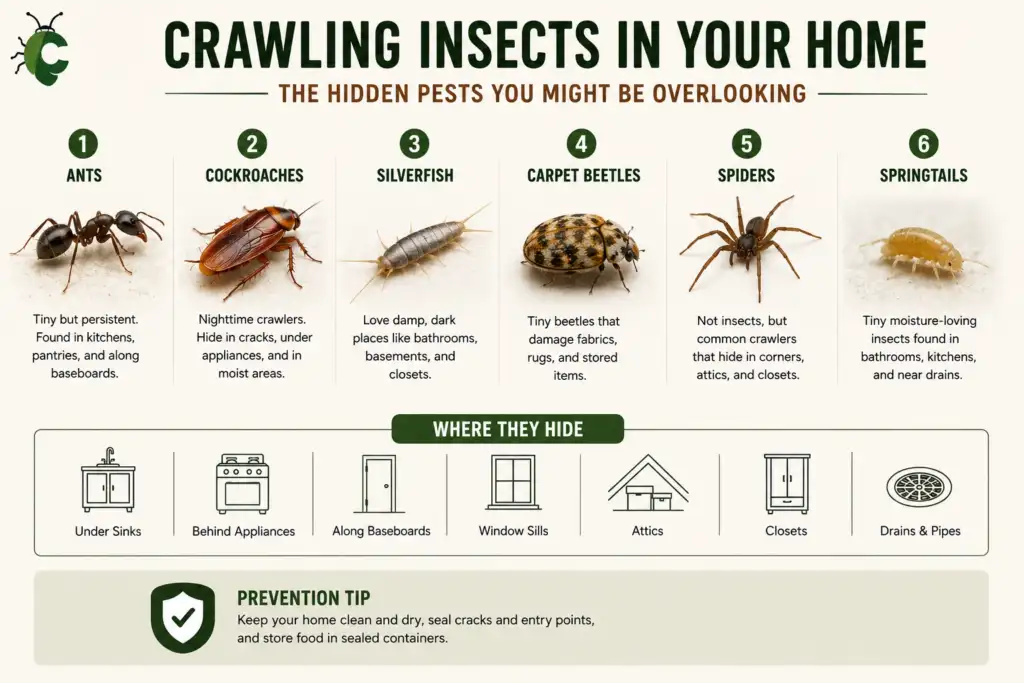
- Cockroaches, silverfish, centipedes, and termites inhabit wall voids and basements.
- Frass, grease marks, and mud tubes reveal hidden infestations.
- Peak activity occurs between 10:00 PM and 4:00 AM.
- Dehumidifiers set below 50% relative humidity disrupt insect survival.
- Foundation gaps wider than 1/16 inch require immediate caulking.
Introduction
Crawling insects occupy 14.8 million US homes each year. Cockroaches, silverfish, centipedes, and earwigs infiltrate basements, wall voids, and attics through gaps as small as 1/16 inch. Most homeowners detect these hidden pests only after populations exceed 100 individuals.
Unidentified droppings, nocturnal rustling, and unexplained property damage create persistent anxiety for homeowners who lack clear identification criteria.
This guide delivers exact identification markers, species-specific habitat profiles, and step-by-step exclusion protocols to eliminate hidden infestations within 30 days.
Insects Living in Walls: The Most Common Hidden Species
Cockroaches, silverfish, house centipedes, earwigs, and termites represent the most common house insects that establish colonies inside residential wall voids. Each species exploits distinct microhabitats within wood-frame homes built between 1950 and 1990. Wall voids near plumbing fixtures provide the moisture and darkness these pests require for reproduction.
German cockroaches occupy wall voids adjacent to kitchen and bathroom plumbing. American cockroaches prefer damp basement perimeters. Oriental cockroaches cluster near floor drains and crawlspace access points.
Silverfish consume cellulose-based materials. These insects living in walls feed on drywall paper facing, book bindings, and wallpaper paste. Infestations concentrate in bathrooms where relative humidity exceeds 75%.
House centipedes hunt prey insects inside basement wall cracks. Earwigs aggregate under bathtubs and in damp crawlspaces. Termites cause $5 billion in US property damage annually, according to the National Pest Management Association. Subterranean termites construct mud tubes along foundation walls to reach wooden structural members.
Cockroach Infestation Signs in Kitchens and Bathrooms
Fecal smears appear as black pepper specks near baseboards in infested kitchens. Egg casings called oothecae measure 8 to 10 mm and contain 20 to 40 nymphs each. A musty, oily odor intensifies near harborage sites behind refrigerators and under sinks.
Silverfish Damage to Books and Wallpaper
Irregular feeding holes riddle paper surfaces in infested storage areas. Yellow staining accompanies shed scales on damaged materials. Infestations peak in relative humidity above 75% in bathrooms and basements.
Nocturnal Crawling Bugs: Why You Never See Them
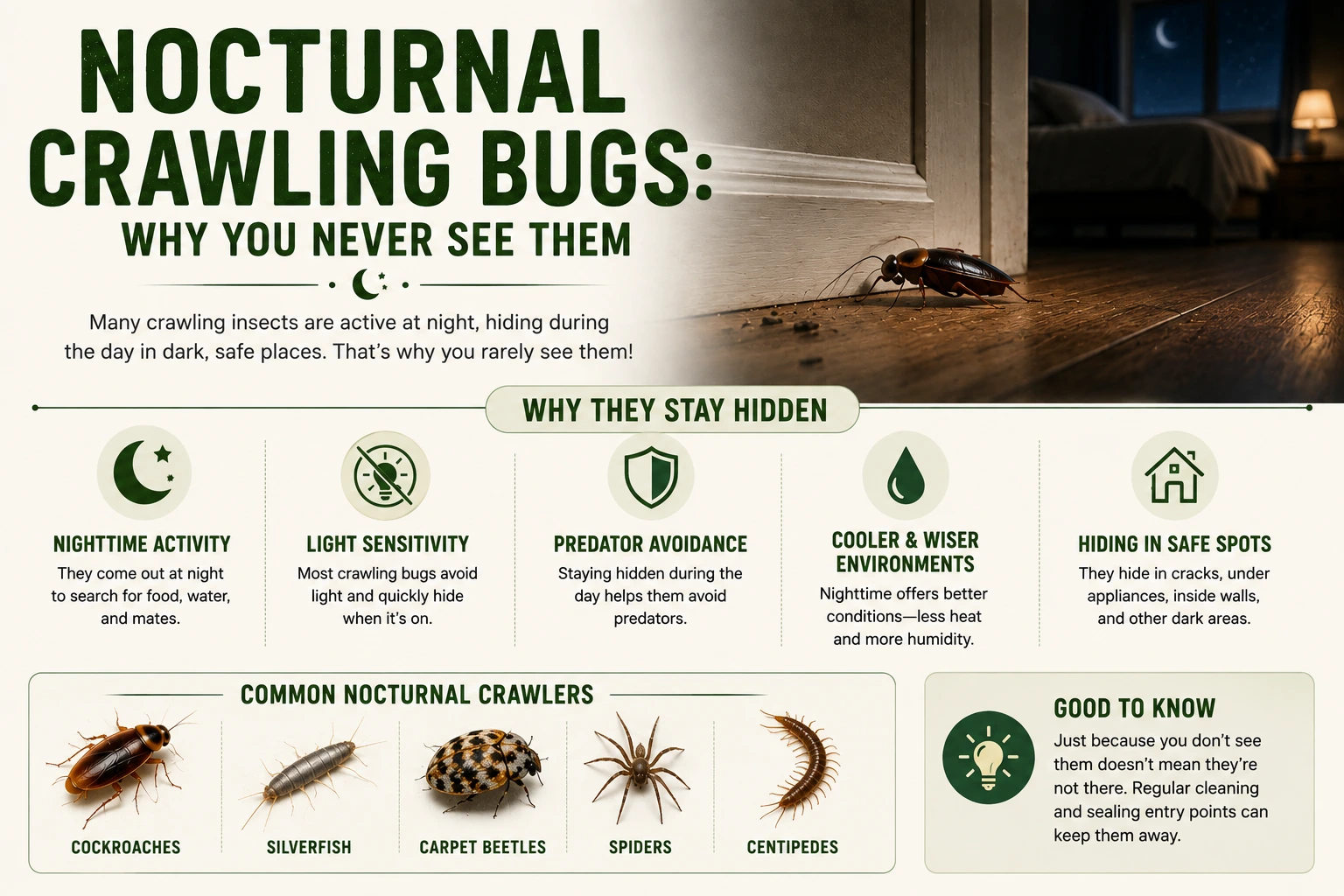
Cockroaches, silverfish, and centipedes exhibit negative phototaxis, an innate behavioral response that drives light avoidance. Peak activity for nocturnal crawling bugs occurs between 10:00 PM and 4:00 AM in dark, humid zones of the home. Scurrying sounds in walls intensify during summer months when reproduction peaks in temperate climates. Droppings accumulate in corners and behind appliances for 2 to 4 weeks before visual confirmation of late instar nymphs occurs. Homeowners who install motion-sensor cameras in basements capture 80% of activity during these hours.
What Do Centipedes Eat Inside Homes?
House centipedes consume spiders, silverfish, and cockroach nymphs. A single centipede eliminates 10 to 15 prey insects monthly. Their presence signals existing prey populations requiring control.
Crawling Insects at Night: Sound Identification
Cockroach scurrying produces a rustling papery sound in wall voids. Termite soldier head-banging creates a faint clicking noise audible in quiet basements. Silverfish movement remains nearly silent due to their soft tarsi.
Signs of Pests in Walls: What Homeowners Miss
Physical evidence reveals hidden infestations before visual pest contact occurs. Homeowners who conduct quarterly inspections detect problems 60 days earlier than those who wait for visual sightings.
- Frass appears as coffee-ground specks near baseboards in cockroach harborage areas.
- Exoskeleton molts pile up in corners behind furniture where nymphs develop.
- Grease marks from cockroach bodies darken wall edges near water pipes.
- Termite mud tubes extend 2 to 4 inches from soil lines across foundation walls.
- Irregular notching and yellow scale deposits indicate silverfish activity on paper goods.
A basement inspection in a 1970s ranch home revealed 40+ silverfish scatter from a single damp cardboard box stored under a utility sink. The cardboard underside showed irregular notching and yellow scale deposits invisible from the exterior.
Cockroach Droppings Look Like These Specific Markers
German cockroach feces resemble coarse black pepper specks measuring 1 mm. American cockroach droppings form blunt cylinders 2 to 3 mm long with distinct ridges. Smear marks appear as dark streaks along horizontal surfaces where cockroaches travel consistently.
Termite Mud Tubes on Foundation Walls
Subterranean termites build pencil-width tunnels from soil to wood siding. Broken tubes reveal live worker termites inside within 30 seconds of disturbance. New tube construction indicates active feeding on structural lumber.
Bugs in Basement Undetected: Moisture and Entry Points
Basements with relative humidity above 60% attract silverfish, earwigs, and millipedes. Foundation cracks wider than 1/8 inch admit cockroaches and centipedes into living spaces. Floor drains without P-traps allow sewer-dwelling insects to enter homes through dried plumbing. Organic debris in crawlspaces sustains springtail and cricket populations. Moisture control and humidity reduction remain the primary defenses against basement colonization.
Bugs Coming Up Drains: Sewer Access Points
Oriental cockroaches exploit dry drain traps in laundry rooms and basements. Floor drains in these areas require weekly water pouring to maintain trap seals. Drain covers with 1/16-inch mesh block entry of adult cockroaches and other crawling insects.
What Attracts Millipedes to Homes
Millipedes require soil moisture above 50% for survival. Foundation mulch beds within 12 inches of siding create migration highways into basements. Indoor populations die within 48 hours without moisture.
Liquid pesticides applied near floor drains connected to septic systems contaminate groundwater. Boric acid powder requires exclusion of children and pets from treated areas for 24 hours.
Basement Bug Prevention: Step-by-Step Exclusion and Elimination
Integrated pest management protocols eliminate crawling insects through systematic habitat modification and entry point exclusion. Homeowners with single-family wood-frame homes implement these five steps:
- Dehumidifiers maintain relative humidity below 50% in basements and crawlspaces.
- Caulk fills gaps around utility penetrations larger than 1/16 inch.
- Boric acid powder applied to wall voids eliminates cockroach nymphs within 72 hours.
- Diatomaceous earth spread in dry zones desiccates silverfish and centipedes in 48 hours.
- Weekly drain pouring maintains P-trap seals in floor drains and laundry sinks.
DIY Bug Removal vs. Professional Extermination
DIY methods succeed for populations under 50 visible insects in homes built after 1980. Professional treatment becomes necessary when frass appears in 3 or more rooms. Termite infestations require licensed applicators in 49 states.
When to Call an Exterminator
Structural damage to joists or studs mandates immediate professional assessment. Recurring infestations after 30 days of DIY treatment indicate hidden colonies behind walls. Multiple pest species present simultaneously signal severe moisture or sanitation issues.
Boric acid causes skin and respiratory irritation. Diatomaceous earth must be food-grade in homes with pets. Never mix bleach with ammonia-based cleaners when sanitizing insect harborage areas.
Common Myth: Earwigs Crawl Into Ears
Earwigs possess pincer-like cerci but lack behavioral drive to enter human ears. The University of California Integrated Pest Management Program classifies earwigs as nuisance pests with no medical significance to humans. Earwigs do not transmit disease, trigger allergens, or cause respiratory issues. Earwigs prefer decaying organic matter under mulch and rocks. Indoor earwig presence indicates exterior moisture accumulation within 3 feet of foundation walls.
Frequently Asked Questions About Crawling Insects
What bugs live in walls?
Cockroaches, silverfish, centipedes, and termites inhabit wall voids. Cockroaches prefer kitchen plumbing walls. Silverfish consume drywall paper in humid bathrooms. Centipedes hunt prey insects in basement wall cracks. Termites construct mud tubes inside wall cavities to reach wooden studs.
Are house centipedes dangerous?
House centipedes pose no medical threat to humans. Their venomous front legs can deliver a mild sting comparable to a bee sting in rare cases. These arthropods eliminate cockroaches, silverfish, and spiders. Their presence indicates existing prey insects requiring control.
What do cockroach droppings look like?
German cockroach feces resemble coarse black pepper specks measuring 1 mm. American cockroach droppings form blunt cylinders 2 to 3 mm long with ridges. Oriental cockroach waste appears as watery smears. Fresh droppings feel moist. Accumulations occur near baseboards, cabinet hinges, and wall voids.
How to get rid of silverfish?
Silverfish elimination requires humidity reduction below 50% using dehumidifiers. Boric acid powder applied to baseboard cracks kills nymphs within 72 hours. Diatomaceous earth desiccates adults in 48 hours. Remove cardboard boxes and paper stacks from damp basements. Seal wall cracks with silicone caulk.
Why do I have centipedes?
Centipedes enter homes pursuing prey insects such as cockroaches, silverfish, and spiders. Damp basements and crawlspaces above 60% relative humidity support both predator and prey populations. Foundation cracks wider than 1/8 inch provide entry. Exterior mulch beds within 12 inches of siding create migration paths.
Conclusion
Crawling insects establish detectable populations within 30 days of entry. Early identification of frass, moisture patterns, and nocturnal sounds prevents structural damage exceeding $5,000 in single-family wood-frame homes. Wood-destroying organisms such as termites cause the most severe financial impact when left untreated.
Systematic inspection and exclusion methods eliminate hidden infestations in single-family homes with populations under 100 insects. Homeowners who apply dehumidification, caulking, and targeted desiccant treatments regain control within 30 days.
Schedule a free home pest inspection today to identify hidden crawling insects before populations exceed 100 individuals.