
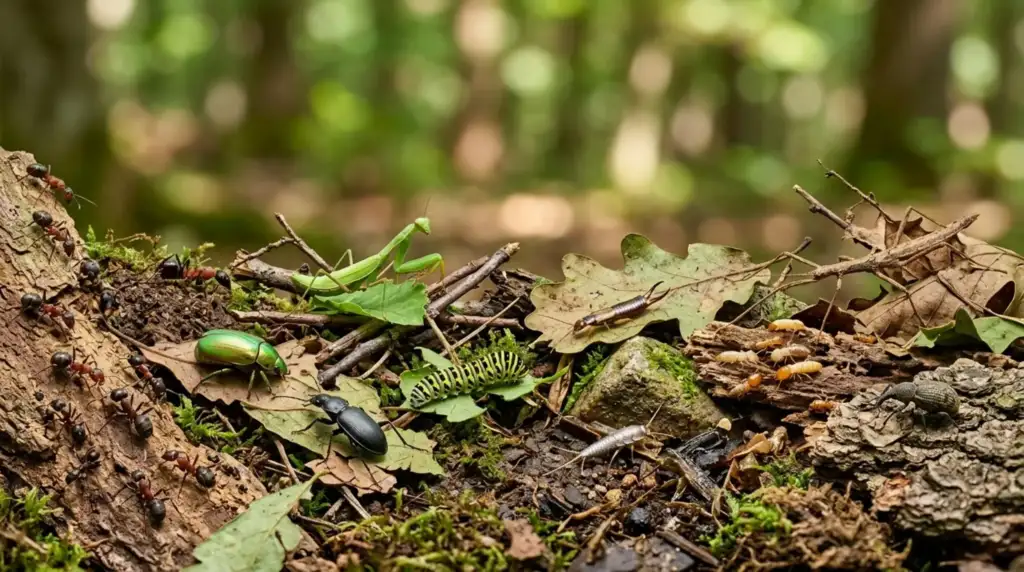
Have you ever noticed tiny insects crawling across your kitchen floor, garden path, or backyard and wondered what they were? Crawling insects are among the most common creatures we encounter in our daily lives. While some are beneficial to the environment, others can become household or garden pests. Learning to recognize these insects helps you understand their role in nature and decide whether they require attention or should simply be left alone.
Crawling insects come in many shapes, sizes, and colors. Some live in soil, some hide beneath rocks or logs, while others make their homes inside buildings. Whether you’re a homeowner, gardener, student, or insect enthusiast, understanding these fascinating creatures can help you appreciate the incredible diversity of the insect world.
In this guide, you’ll discover the most common crawling insects, how to identify them, where they live, and the important roles they play in ecosystems.
What Are Crawling Insects?
Crawling insects are insects that primarily move by walking or crawling rather than flying. Although many crawling insects have wings, they spend most of their time moving across surfaces such as the ground, plants, trees, walls, or inside homes.
Like all insects, they share several key characteristics:
- Six legs
- Three body segments (head, thorax, and abdomen)
- One pair of antennae
- An external skeleton (exoskeleton)
Their crawling behavior helps them search for food, build nests, avoid predators, and explore their surroundings.
Why Are Crawling Insects Important?
Many people think of crawling insects as pests, but the truth is that most of them play valuable roles in the environment.
Some crawling insects:
- Pollinate flowers
- Break down dead organic matter
- Improve soil health
- Control harmful insect populations
- Provide food for birds, reptiles, and mammals
Only a small number become household or agricultural pests.
Most Common Crawling Insects
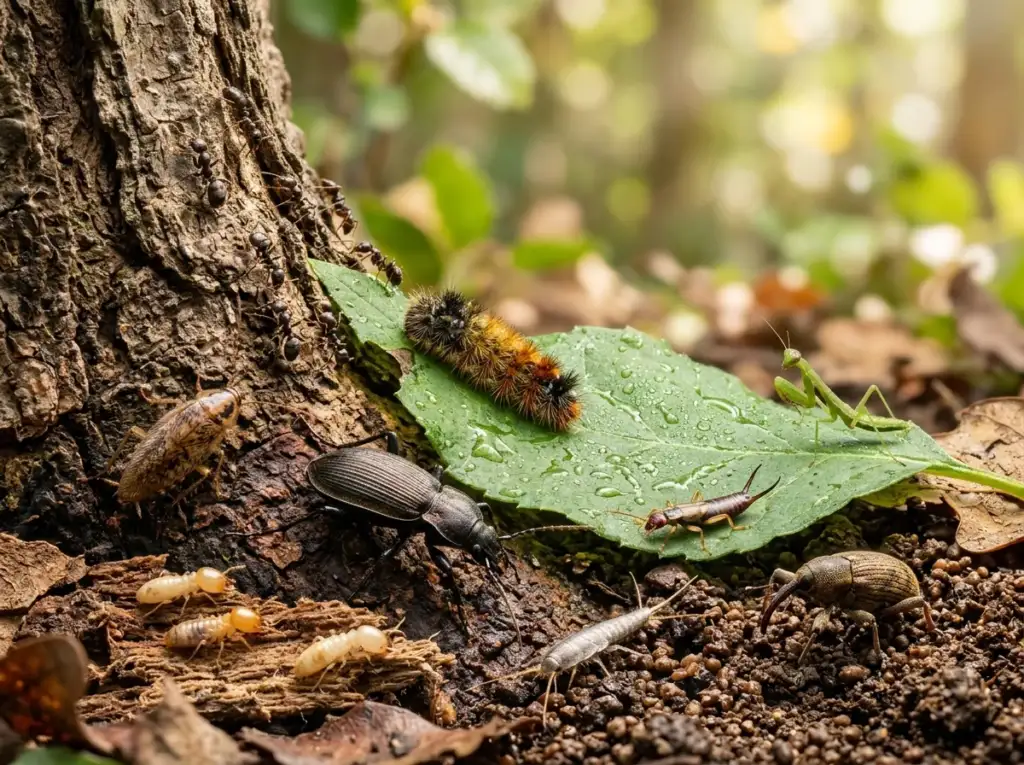
1. Ants
Ants are among the most familiar crawling insects in the world. They live in organized colonies that may contain thousands of individuals working together.
Identification Features
- Narrow waist
- Elbowed antennae
- Six slender legs
- Usually black, brown, or reddish
Where They’re Found
- Gardens
- Sidewalks
- Kitchens
- Forests
- Lawns
Most ants are harmless and help recycle organic material, although some species invade homes in search of food.
2. Beetles
Beetles are one of the largest insect groups, with hundreds of thousands of species worldwide.
Identification Features
- Hard wing covers
- Oval or elongated body
- Six legs
- Strong exoskeleton
Common Habitats
- Gardens
- Woodlands
- Under rocks
- Tree bark
- Inside homes
Many beetles are beneficial because they feed on pests or help decompose dead plants and animals.
3. Cockroaches
Cockroaches have existed for millions of years and are well adapted to many environments.
Identification Features
- Flat body
- Long antennae
- Fast runners
- Brown or dark-colored body
Where They Live
- Kitchens
- Basements
- Bathrooms
- Sewers
- Warm, humid environments
Keeping homes clean and dry helps reduce cockroach populations.
4. Caterpillars
Caterpillars are the larval stage of butterflies and moths.
Identification Features
- Soft segmented body
- Multiple pairs of legs
- Slow movement
- Wide range of colors
Most caterpillars feed on leaves and eventually transform into butterflies or moths through metamorphosis.
5. Earwigs
Earwigs are easy to recognize because of the pincers at the end of their abdomen.
Identification Features
- Long narrow body
- Curved pincers
- Brown coloring
- Long antennae
Despite myths, earwigs do not crawl into human ears. They are generally harmless and prefer damp places.
6. Silverfish
Silverfish are wingless crawling insects commonly found indoors.
Identification Features
- Silvery-gray scales
- Fish-like movement
- Long antennae
- Three tail-like appendages
They prefer dark, humid environments and often feed on paper, glue, books, and fabrics.
7. Termites
Termites are social insects that live in colonies and feed mainly on wood and plant material.
Identification Features
- Soft pale body
- Straight antennae
- Thick waist
- Small size
Because termites can damage wooden structures, early identification is important.
8. Weevils
Weevils are a type of beetle recognized by their elongated snout.
Identification Features
- Long snout
- Hard shell
- Compact body
- Slow movement
Some species infest stored grains, rice, flour, and other pantry foods.
9. Stick Insects
Stick insects are masters of camouflage.
Identification Features
- Extremely thin body
- Long legs
- Brown or green color
- Resemble twigs
Their appearance helps them avoid predators by blending into surrounding vegetation.
10. Praying Mantises
Praying mantises are fascinating predators.
Identification Features
- Folded front legs
- Long neck
- Triangular head
- Large eyes
They help control pest populations by feeding on flies, grasshoppers, and other insects.
Where Are Crawling Insects Commonly Found?
Different crawling insects prefer different habitats depending on food, moisture, and shelter.
Around Homes
Many insects enter homes searching for food, warmth, or water.
Examples include:
- Ants
- Cockroaches
- Silverfish
- Weevils
Gardens
Gardens provide ideal conditions for many crawling insects because they contain plants, flowers, and moist soil.
Common garden insects include:
- Beetles
- Ants
- Caterpillars
- Praying mantises
Forests
Forests support an enormous variety of crawling insects beneath logs, leaves, and tree bark.
Farms
Agricultural fields contain beneficial insects as well as crop pests that affect food production.
How to Identify Crawling Insects
Correct Bug identification involves observing several characteristics instead of relying on color alone.
Look for:
- Body shape
- Number of legs
- Antennae
- Body size
- Color patterns
- Habitat
- Movement
- Wing structure (if present)
Taking a clear photograph from multiple angles can make identification much easier.
Are All Crawling Insects Harmful?
No. Most crawling insects are either harmless or beneficial.
Beneficial crawling insects include:
- Lady beetles that eat aphids
- Ground beetles that prey on pests
- Ants that recycle organic matter
- Praying mantises that hunt harmful insects
Only a small percentage of crawling insects become serious pests in homes or agriculture.
Tips for Living Alongside Crawling Insects
You don’t always need to remove crawling insects. In many cases, simple preventive measures are enough.
Helpful tips include:
- Keep food stored in sealed containers.
- Clean up crumbs and spills promptly.
- Repair water leaks to reduce moisture.
- Seal cracks around doors and windows.
- Maintain a tidy garden by removing excess debris.
- Avoid using pesticides unless necessary.
These steps help reduce unwanted insects while protecting beneficial species.
Fun Facts About Crawling Insects
- Ant colonies can contain millions of individuals.
- Beetles make up nearly 40% of all known insect species.
- Praying mantises can rotate their heads nearly 180 degrees.
- Stick insects are among the best camouflaged animals in nature.
- Caterpillars transform into butterflies or moths through complete metamorphosis.
- Silverfish have existed for hundreds of millions of years.
- Some termites build towering nests several meters high.
Conclusion
Crawling insects are an essential part of our natural world. From hardworking ants and colorful beetles to fascinating stick insects and helpful praying mantises, these tiny creatures contribute to healthy ecosystems in countless ways. While a few species may become household pests, most crawling insects are harmless and even beneficial to plants, wildlife, and people.
By learning how to identify common crawling insects and understanding their habitats and behaviors, you’ll gain a greater appreciation for the incredible diversity of insect life around you.
At TheCrawlix, our goal is to make the world of insects easy to understand through reliable, informative, and beginner-friendly guides. Keep exploring nature with us, and you’ll continue discovering the amazing creatures crawling all around you.
Frequently Asked Questions (FAQs)
1. What are crawling insects?
Crawling insects are insects that primarily move by walking or crawling on surfaces. Common examples include ants, beetles, cockroaches, silverfish, termites, and caterpillars.
2. Are all crawling insects harmful?
No. Most crawling insects are harmless or beneficial. Many help pollinate plants, recycle nutrients, improve soil health, or control harmful pests.
3. How can I identify a crawling insect?
Observe its body shape, number of legs, antennae, size, color, habitat, and behavior. Comparing these features with trusted insect guides can help you identify the species.
4. Why do crawling insects enter homes?
Many crawling insects enter homes in search of food, water, warmth, or shelter. Proper sanitation and sealing entry points can help reduce unwanted visitors.
5. Which crawling insects are most common?
Some of the most common crawling insects include ants, beetles, cockroaches, termites, silverfish, earwigs, caterpillars, weevils, stick insects, and praying mantises.