
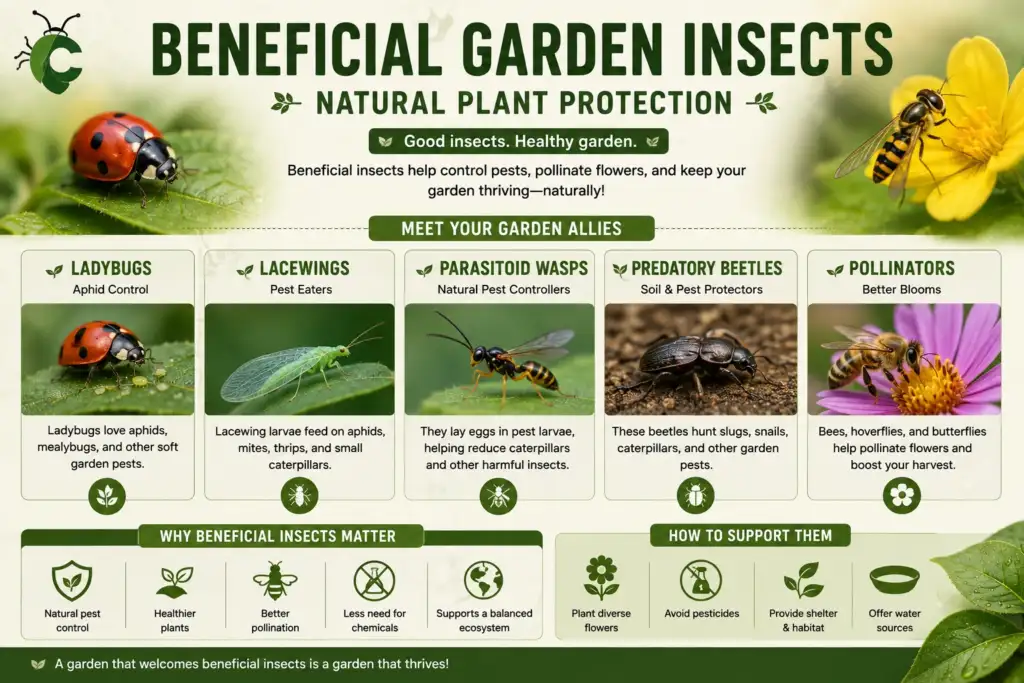
- Beneficial garden insects fall into predators, parasitoids, and pollinators.
- Predators consume 50 to 100 aphids per day during active feeding stages.
- Parasitoids kill host pests within 7 to 14 days after egg deposition.
- Pollinators increase fruit set by 30% to 70% in vegetable gardens.
- Insectary planting and shallow water sources attract and retain these insects.
Meet the Beneficial Garden Insects That Naturally Protect Your Plants
Beneficial garden insects fall into three functional categories: predators that hunt and consume pest species, parasitoids that lay eggs inside host pests, and pollinators that increase fruit and vegetable yields. These insects reduce or eliminate the need for synthetic pesticides while maintaining garden ecosystem balance. A single square yard of healthy garden soil hosts 500 to 2,000 individual beneficial insects during peak growing season.
Home gardeners lose an estimated 30% of vegetable yields annually to aphids, caterpillars, and mites, yet many resort to chemical sprays that kill both pests and protectors indiscriminately.
This guide identifies the 10 most impactful beneficial insects, explains exactly how each one protects specific plants, and provides actionable steps to attract and retain them in your garden.
How Natural Pest Control Works in Your Garden
Natural pest control operates through three distinct biological mechanisms. Predators such as ladybugs and lacewings consume 50 to 100 aphids per day during active feeding stages. Parasitoids deposit eggs inside caterpillars, beetle larvae, or aphids, and emerging larvae kill the host within 7 to 14 days. Pollinators increase fruit set by 30% to 70% in vegetable gardens, which indirectly strengthens plant vigor against pest pressure.
The USDA Natural Resources Conservation Service documents that native pollinators and biological control agents deliver billions of dollars in ecosystem services annually to agricultural and home garden settings. These ecosystem services include pest suppression, crop pollination, and soil health maintenance that synthetic inputs cannot replicate. Conservation biological control focuses on habitat modification rather than insect purchase and release, making it the foundational strategy for sustainable home gardens.
Trophic cascades occur when predator populations suppress herbivore populations, allowing plants to allocate more energy to growth and defense compounds. This predator-prey balance represents the core mechanism behind biological pest control and Integrated Pest Management (IPM) programs. Trophic cascades and predator-prey balance explain why gardens with diverse insect populations experience fewer severe pest outbreaks than chemically managed plots.
The Three Functional Categories of Beneficial Insects
Predators hunt and consume pest species directly. Ladybugs (Coccinellidae), green lacewings (Chrysoperla carnea), and praying mantises (Mantis religiosa) fall into this category and provide immediate reductions in aphid, caterpillar, and beetle populations.
Parasitoids lay eggs inside or on host pests. Parasitic wasp species such as Trichogramma spp. deposit eggs inside caterpillar eggs, and emerging larvae consume the host from within. This biological pest control method targets pests that predators often miss.
Pollinators transfer pollen between flowers and increase yields. Native bees (Osmia lignaria, Bombus spp.) and hoverflies (Syrphidae) pollinate tomatoes, peppers, and squash more efficiently than honeybees in many home garden conditions.
Why Chemical Sprays Destroy This Balance
Broad-spectrum insecticides kill 90% or more of non-target insects, including beneficial predators and parasitoids. Residual toxicity from pyrethroids and neonicotinoids persists in soil and nectar for 2 to 4 weeks post-application, creating lethal exposure for beneficial insects that contact treated plants or soil.
Pest populations rebound faster than predator populations due to shorter reproductive cycles. Aphids produce offspring in 7 to 10 days under optimal conditions, while ladybugs require 4 to 6 weeks to complete one generation. Gardeners who avoid chemical pesticides and allow predator populations to establish experience long-term pest suppression that sprays cannot achieve.
Meet the 10 Most Beneficial Garden Insects
Proper garden insect identification ensures you protect these species instead of harming them. The 10 species below represent the best beneficial insects for organic gardening across USDA Hardiness Zones 4 through 9. These insects that eat garden pests provide complete coverage for aphids, caterpillars, mites, and slugs.
1. Ladybugs (Coccinellidae)
Ladybugs eat aphids at a rate of 50 per day during adulthood. Their larvae consume even more, targeting mites, scale insects, and mealybugs across kale, tomatoes, and roses. These good bugs garden residents display red or orange elytra with black spots, making them easy to spot on leaf undersides.
2. Green Lacewings (Chrysoperla carnea)
Green lacewing larvae, called aphid lions, devour 600 aphids during their 2- to 3-week larval stage. Adults feed on nectar and pollen, so they remain in gardens with abundant flowers. Lacewings control thrips, mealybugs, and caterpillar eggs on tomatoes, peppers, and apples.
3. Praying Mantises (Mantis religiosa)
Praying mantises are generalist predators that consume caterpillars, beetles, grasshoppers, crickets, and flies. Gardeners wondering where to find praying mantis eggs can locate them at native plant nurseries and reputable biological supply companies. Each egg case contains 100 to 200 individuals and attaches securely to shrub branches in spring.
4. Parasitic Wasps (Trichogramma spp.)
Parasitic wasp species such as Trichogramma lay eggs inside caterpillar eggs, preventing the pest from hatching. These wasps measure 1 to 2 millimeters in length and require nectar from small flowers like dill and fennel to sustain their populations. Trichogramma wasps control corn earworms, tomato hornworms, and cabbage loopers without stinging humans.
5. Hoverflies (Syrphidae)
Hoverfly larvae eat aphids on roses, lettuce, and strawberries, while adult hoverflies rank among the most important insects that pollinate global crops. Adults pollinate 72% of global crop species and visit flowers from spring through fall. Their yellow-and-black banded abdomens mimic bees, but they possess no stinger and pose zero threat to gardeners.
6. Ground Beetles (Carabidae)
Ground beetles hunt slugs, snails, and cutworms at night across vegetable beds and ornamental borders. These predatory garden insects remain hidden under mulch, rocks, and logs during daylight hours. A single ground beetle consumes up to 20 cutworms per night during peak activity.
7. Minute Pirate Bugs (Orius insidiosus)
Minute pirate bugs target thrips and spider mites on tomatoes, beans, and ornamental flowers. These natural garden protectors measure 2 to 3 millimeters in length and attack pests 10 times their size. They require pollen from flowering plants to reproduce, so insectary planting sustains their populations.
8. Damsel Bugs (Nabis spp.)
Damsel bugs prey on caterpillars, aphids, and leafhoppers across brassicas, tomatoes, and peppers. These insects eat caterpillars in both nymph and adult stages, providing continuous pest suppression throughout the growing season. Their slender bodies and grasping front legs distinguish them from similar-looking plant bugs.
9. Tachinid Flies
Tachinid flies parasitize caterpillars, beetles, and true bugs by laying eggs on or inside the host. Larvae feed internally and kill the pest within 10 to 14 days. Adult tachinid flies visit composite flowers such as daisies and sunflowers for nectar, linking their survival directly to flower diversity.
10. Native Bees (Osmia lignaria, Bombus spp.)
Native bees pollinate tomatoes, peppers, and squash more efficiently than honeybees in cool or damp conditions. Mason bees (Osmia lignaria) complete seasonal insect life cycles in 6 to 8 weeks and visit 20 times more flowers per day than honeybees. Bumblebees (Bombus spp.) perform buzz pollination on blueberries and tomatoes, increasing fruit set by 30% or more.
How to Attract Beneficial Insects to Your Garden
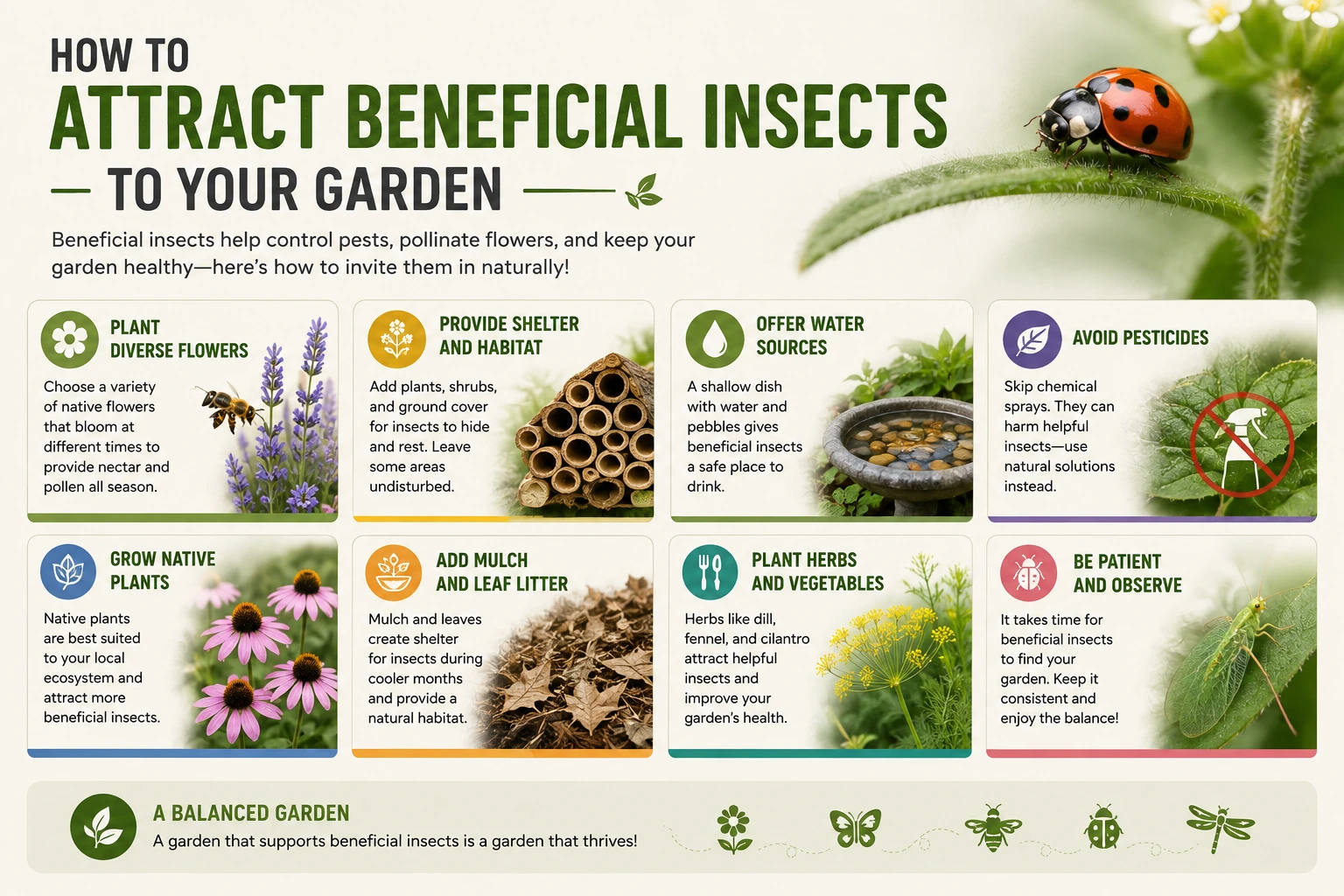
Insectary planting and companion crops form the foundation of any strategy to attract beneficial insects to a home garden. The following seven steps create the habitat, food, and water resources that predatory and pollinating species require.
Plant Umbelliferous Flowers for Parasitoids
Dill, fennel, Queen Anne’s lace, and parsley produce flat-topped flower clusters that attract parasitic wasps and hoverflies. These plants attract predatory garden insects when allowed to bolt and flower in mid-summer. Sow seeds in patches 2 feet by 3 feet near vegetable beds for maximum impact.
Add Composite Flowers for Predators
Sunflowers, daisies, yarrow, and asters provide pollen and nectar for ladybugs and lacewings. These are among the best plants for beneficial insects because they bloom from summer through fall. Composite flowers support pollinator corridors and wildflower strips that connect isolated garden beds.
Install a Shallow Water Source
A shallow water source with landing stones increases insect retention by 40% compared to dry gardens. Use a saucer 1 inch deep filled with pebbles and refresh the water every 2 to 3 days during hot weather. Position the water within 10 feet of vegetable beds where predatory species hunt.
Provide Undisturbed Ground Cover
Undisturbed ground cover and mulch provide overwintering habitat for ground beetles and pupating lacewings. Apply 2 to 3 inches of straw or leaf mulch around vegetable plants and avoid tilling in fall. Sixty percent of beneficial insects overwinter in garden debris and the top 2 inches of soil.
Establish Permanent Insect Habitat Features
Brush piles, rock piles, beetle banks, and unmowed strips create year-round shelter. A beetle bank measuring 4 feet by 10 feet along a field edge or garden border houses hundreds of ground-dwelling predators. Learning how to build insect habitat of this type requires only unmowed native grasses and a few large stones.
Use Native Plant Species for Insect Support
Native insects co-evolved with native plants and recognize them as food sources three times faster than exotic species. Plants that attract predatory garden insects in most US regions include milkweed, goldenrod, wild bergamot, and native aster species. These native plant species for insect support bloom in succession from spring through fall.
Avoid Fall Tilling and Debris Removal
Gardeners who leave standing stems and leaf litter through winter retain 60% more beneficial insects than those who practice fall cleanup. This practice exemplifies sustainable gardening methods that prioritize biological control over chemical intervention. Undisturbed debris creates biodiversity hotspots in urban gardens where natural habitat is limited.
The Best Plants for Beneficial Insects
The following eight plants attract and sustain beneficial insects through successive bloom periods. Dill and fennel (spring to early summer) attract parasitic wasps. Yarrow and daisies (early to mid-summer) sustain ladybugs and lacewings. Sunflowers and milkweed (mid- to late summer) feed native bees and hoverflies. Asters and goldenrod (late summer to fall) provide final nectar sources before overwintering. These plants attract ladybugs and other predators when positioned within 18 inches of vegetable rows using the spacing principles outlined in the companion planting guide.
Creating Permanent Insect Habitat
Permanent habitat features require no annual replanting and improve each year. A rock pile 3 feet in diameter with crevices 1 to 2 inches wide shelters ground beetles and spiders through winter. An unmowed strip 2 feet wide along a fence line creates a microclimate that retains moisture and hosts alternative prey for emerging predators in spring. Schedule bloom succession from April through October with the seasonal calendars available in the pollinator garden design resource.
In spring 2023, I released 1,500 Hippodamia convergens ladybugs at dusk into a raised vegetable bed where aphids had colonized the kale. A dill patch and shallow water dish positioned within 10 feet of the release site retained 80% of the population after 48 hours. This observation confirmed that food and water proximity matter more than release quantity for how to keep beneficial insects around.
Common Mistakes That Repel Beneficial Insects
- Releasing ladybugs at midday in direct sun
Gardeners who release ladybugs at midday in direct sun lose 95% of the insects within 24 hours as they fly to neighboring properties. Release occurs at dusk near food and water sources to maximize retention.
- Using systemic insecticides as a preventative
Systemic insecticides containing neonicotinoids render plant tissue toxic to all feeding insects for 6 to 8 weeks after application. These products destroy garden insects you should encourage while allowing pest populations to recover faster due to their shorter reproductive cycles.
- Removing all garden debris in fall
Fall cleanup that removes every leaf and stem destroys overwintering habitat for 60% of beneficial species. Ground beetles, lacewing pupae, and native bee cocoons reside in the top 2 inches of soil and garden litter.
- Planting only non-native ornamental flowers
Native insects co-evolved with native plants and recognize them as food sources three times faster than exotic species. Landscapes filled with non-native ornamentals fail to provide the nectar chemistry and bloom timing that local beneficial insects require.
- Assuming all wasps are pests
Parasitic wasps are harmless to humans and account for 40% of natural caterpillar control in unmanaged gardens. Learning how to identify good bugs vs bad prevents the unnecessary destruction of species that perform organic pest control without chemicals.
Gardeners searching where to buy ladybugs online must verify supplier species before purchase. The Asian lady beetle (Harmonia axyridis) is invasive in North America, outcompetes native Coccinellidae, and bites humans when handled. Source Hippodamia convergens or other native ladybug species from reputable North American suppliers to avoid ecological disruption.
Spiders and ground beetles consume similar prey, which explains why you should not kill spiders in a garden managed for biological control. These arachnids occupy different hunting niches than insects and increase overall predation rates. Chemical-free horticulture practices such as hand-picking pests and using row covers preserve predator populations while managing pest thresholds. Review the organic pest control mistakes guide to identify additional cultural errors that reduce beneficial insect diversity.
Beneficial Insects for Specific Crops
Not all insects protect all plants. Matching the predator to the pest and the crop produces the best results. The table below pairs specific beneficial insects with the crops and pests they target.
| Crop | Primary Pest | Beneficial Insect | Protection Mechanism |
| Tomatoes | Hornworms, thrips | Parasitic wasps, minute pirate bugs | Egg parasitism, direct predation |
| Brassicas | Aphids, cabbage worms | Ladybugs, lacewings | Direct consumption |
| Squash | Vine borers, pollination deficit | Ground beetles, hoverflies | Larval predation, flower pollination |
| Apples/Pears | Aphids, mites | Lacewings, ladybugs | Direct consumption |
| Roses | Aphids | Hoverflies, ladybugs | Larval predation, direct consumption |
Tomato plants benefit from parasitic wasps (Trichogramma) that control hornworms and minute pirate bugs that control thrips. These insects that protect tomato plants reduce the need for hand-picking or Bacillus thuringiensis sprays.
Brassicas including kale, cabbage, and broccoli rely on ladybugs and lacewings for aphid and cabbage worm suppression. Squash and cucumbers require hoverflies for flower pollination and ground beetles for squash vine borer larval control.
Apple and pear trees experience aphid and mite control from lacewings and ladybugs. Roses benefit from hoverfly larvae and ladybugs during aphid outbreaks.
Gardeners seeking which bugs are good for vegetables must match the insect to the specific pest pressure in their region. The vegetable garden pest guide provides region-specific pest calendars. The companion planting by crop resource details flower pairings for each vegetable family.
These ecosystem services in home gardens demonstrate that beneficial insects for vegetable garden success function as targeted living pesticides rather than generalist protectors.
Frequently Asked Questions About Beneficial Garden Insects
What are beneficial garden insects?
Beneficial garden insects are predators, parasitoids, and pollinators that reduce pest populations or increase crop yields without synthetic chemicals. Ladybugs, lacewings, and parasitic wasps represent three common examples. These species form the foundation of natural pest control in home gardens.
How do ladybugs help your garden?
Adult ladybugs consume 50 aphids daily, and larvae eat even more. They also feed on mites, scale insects, and mealybugs. A single ladybug eats 5,000 aphids in its lifetime.
What do praying mantises eat?
Praying mantises are generalist predators that consume caterpillars, beetles, grasshoppers, crickets, and flies. They do not discriminate between pests and beneficial insects. Mantises function best as part of a diverse predator community.
How do you attract beneficial insects naturally?
Plant insectary flowers like dill, fennel, and yarrow. Provide shallow water with landing stones. Avoid pesticides. Leave undisturbed ground cover and mulch for overwintering habitat.
What do green lacewings eat?
Adult lacewings feed on nectar and pollen. Their larvae, called aphid lions, consume 600 aphids during a 2- to 3-week larval stage. They also prey on thrips, mealybugs, and caterpillar eggs.
Conclusion
A garden with thriving beneficial insect populations requires zero chemical intervention to maintain pest levels below economic damage thresholds. The 10 insects profiled here provide complete coverage for aphids, caterpillars, mites, and pollination deficits across all common vegetable and ornamental crops.
Readers who replace one spray application with one insectary planting this season will observe measurable reductions in pest damage within 14 to 21 days.
Subscribe to the weekly garden digest for seasonal insect-attracting planting calendars, or comment below with the beneficial insects you have already spotted in your garden.