
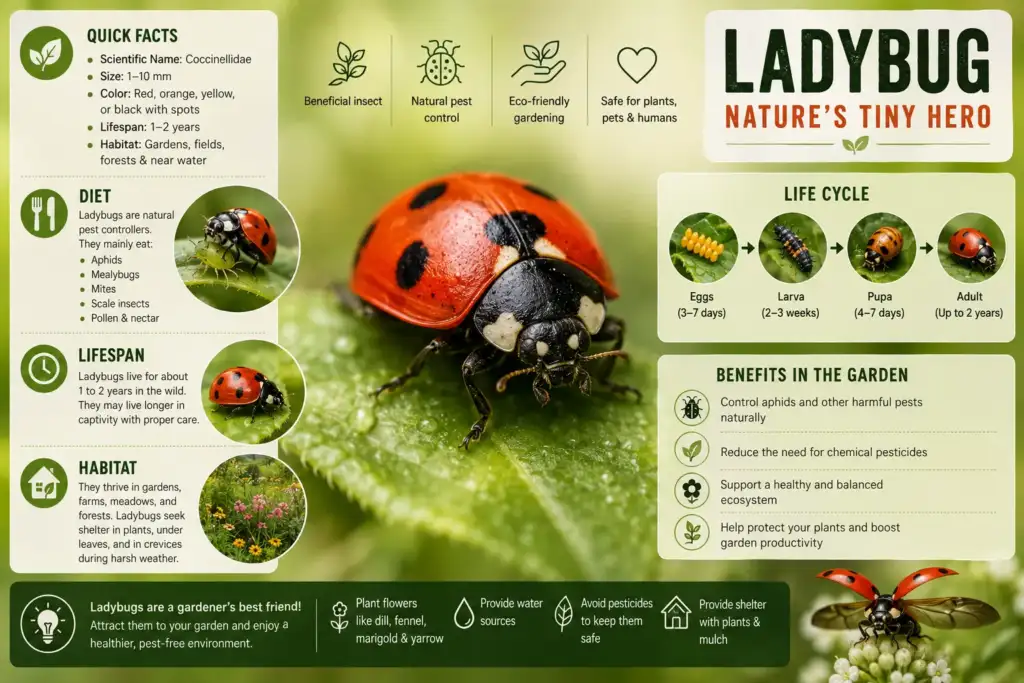
- Ladybugs eat 50-75 aphids daily as adults.
- They live 1-2 years in the wild.
- They prefer gardens, meadows, and forests with flowering plants.
- Complete metamorphosis from egg to adult takes 4-8 weeks.
- One ladybug consumes 5,000 aphids in its lifetime.
Ladybugs (Coccinellidae) are beneficial predatory beetles that consume aphids and soft-bodied pests. A single adult eats 50-75 aphids daily. Gardeners rely on them for natural pest control. Many gardeners mistake ladybug larvae for pests and kill them, destroying their most effective aphid predators before they reach adulthood. This guide covers exact diet details, lifespan data, habitat requirements, and proven methods to attract and retain ladybugs in your garden.
What Do Ladybugs Eat?
Ladybugs eat soft-bodied insects exclusively. They do not eat plant leaves or damage vegetation. A single adult ladybug eats 50-75 aphids per day. Ladybug larvae consume more aphids than adults during their 2-4 week larval stage.
The Coccinellidae family contains over 5,000 species worldwide. Diet expands to spider mites, scale insects, and mealybugs when aphid populations drop. Only a minority of species, such as the twenty-spotted lady beetle (Psyllobora vigintimaculata), supplement their diet with pollen or mildew. The vast majority remain strict predators.
- Adults: 50-75 aphids daily
- Larvae: Higher daily aphid consumption than adults during development
- Alternative prey: Spider mites, scale insects, mealybugs
- Plant damage: Zero; ladybugs do not eat leaves, stems, or fruit
How Long Do Ladybugs Live?
The seven-spotted ladybug (Coccinella septempunctata) lives 1-2 years in the wild under ideal conditions. Indoor ladybugs die within days or weeks without live prey. Lifespan shortens in regions with extreme temperature fluctuations.
Hibernation extends effective survival by reducing metabolic activity for 3-4 months. Predation by birds, spiders, and ants kills 80-90% of ladybugs before they reach adulthood. The 10-20% survival rate explains why females lay 10-50 eggs per clutch to maintain population levels.
Where Do Ladybugs Live?
Native ladybug species inhabit North America, Europe, and Asia. Introduced populations exist globally through both natural spread and intentional release. Preferred habitats include vegetable gardens, meadows, forests, and agricultural fields.
Ladybugs seek sheltered locations for winter hibernation: leaf litter, bark crevices, and rock piles. Habitat quality depends on flowering plants for nectar access and undisturbed ground cover for overwintering.
Safety note: Asian lady beetles (Harmonia axyridis) invade homes through cracks in fall. They may bite and trigger allergic reactions in sensitive individuals. Seal exterior cracks before temperatures drop. Do not handle indoor clusters directly.
Winter Hibernation Behavior
Ladybugs cluster in groups of dozens to thousands during cold months. They produce glycerol to prevent cell freezing. Native species prefer outdoor shelter under logs and leaves. Asian lady beetles enter attics and wall cavities. Disturbing hibernation clusters reduces survival rates by forcing energy expenditure.
Ladybug Life Cycle: From Egg to Adult
Ladybugs complete four stages: egg, larva, pupa, and adult. Females lay 10-50 eggs in clusters directly on leaves near aphid colonies. The larval stage lasts 2-4 weeks. Larvae pass through four instars, shedding their exoskeleton between each growth phase.
Pupation lasts 5-8 days before adult emergence. Total development from egg to adult takes 4-8 weeks depending on temperature and species. Adults develop hardened forewings called elytra that protect the delicate flight wings beneath.
- Egg: 10-50 eggs laid near aphid colonies; hatches in 3-5 days
- Larva: 2-4 weeks; passes through four instars; consumes aphids constantly
- Pupa: 5-8 days; attaches to leaves; no feeding occurs
- Adult: Emerges with soft elytra that harden within 24 hours; begins mating within 1-2 weeks
Identifying Ladybug Larvae
Ladybug larvae display elongated bodies with orange and black coloring. Six legs sit on the thorax. Active movement distinguishes them from sedentary pests like scale insects. Many gardeners mistake them for tiny alligators or harmful insects. Killing larvae destroys the most voracious aphid predators in your garden.
Garden Benefits & Natural Pest Control
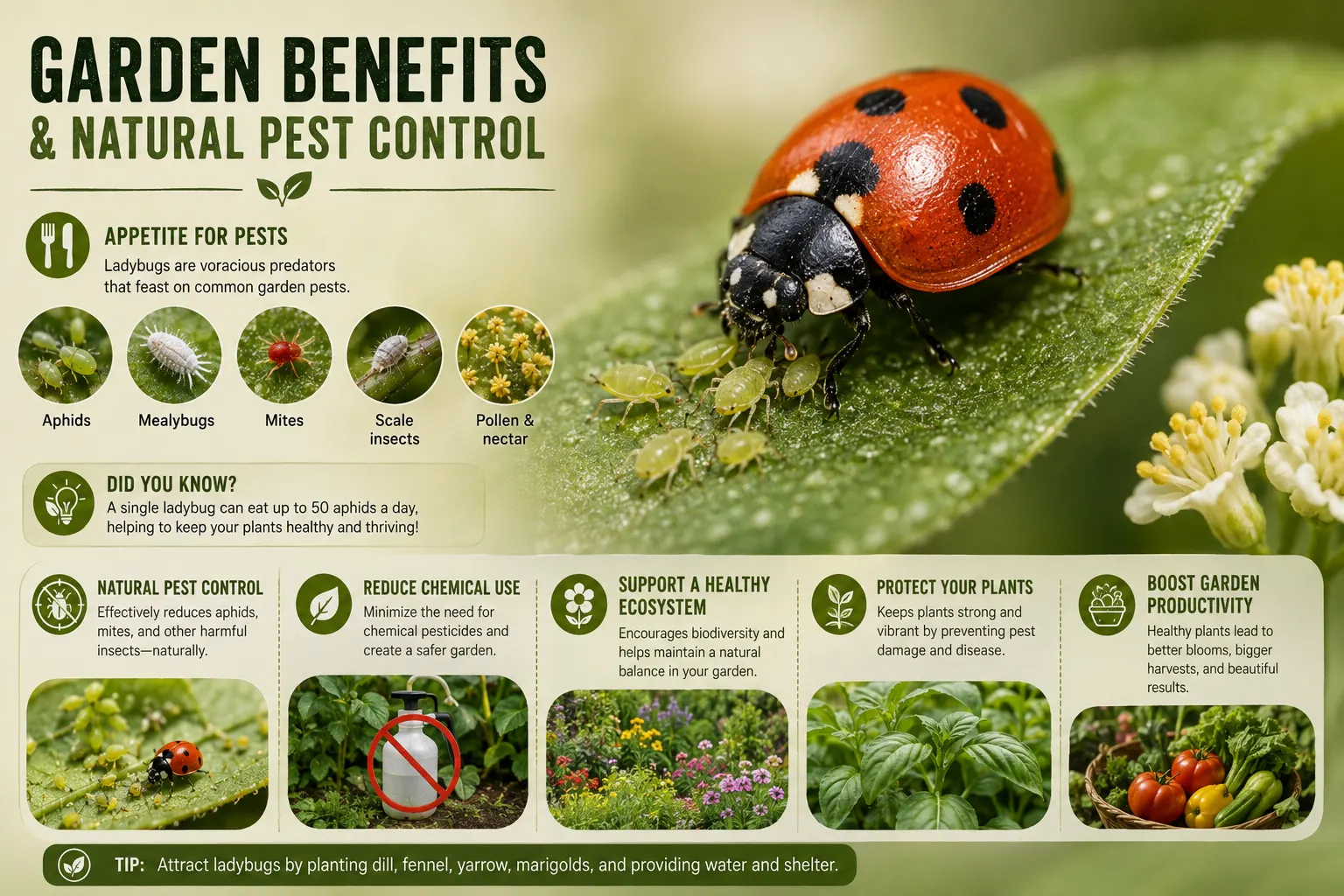
One ladybug consumes approximately 5,000 aphids in its lifetime. The USDA Agricultural Research Service recognizes ladybugs as primary biological control agents in integrated pest management programs. Vegetable gardens with established ladybug populations reduce chemical pesticide use by 50-80% in small-scale trials.
Two myths persist about ladybugs. Myth: Spot count indicates age. Fact: Spot patterns identify species, not age. Myth: Ladybugs deliver live young. Fact: All ladybugs lay eggs. No species gives birth to live larvae.
Asian lady beetles consume pests but compete with native Coccinellidae species for habitat and food.
Safety note: Asian lady beetles can bite and cause allergic reactions. The defensive yellow fluid they emit stains surfaces and triggers irritation. Do not crush them indoors. Vacuum them gently and release them outside.
Native Ladybugs vs Asian Lady Beetles
Table
| Feature | Native Ladybugs | Asian Lady Beetles |
| Body shape | Round, dome-shaped | Slightly elongated, less domed |
| Color | Consistent red with black spots | Variable orange to red |
| Head marking | None distinctive | M-shaped mark behind head |
| Home invasion | Rare; remain outdoors | Common in fall through cracks |
| Defensive fluid | Minimal | Yellow, staining fluid when disturbed |
| Bite risk | Rare | More frequent; causes minor irritation |
How to Attract Ladybugs to Your Garden
Plant dill, fennel, cilantro, yarrow, and marigold to provide nectar and habitat. Avoid broad-spectrum insecticides; they kill ladybugs and eliminate their food sources. Provide shallow water sources and undisturbed leaf litter for overwintering shelter.
Purchase ladybugs from reputable garden suppliers. Release 1,500-3,000 per 1,000 square feet for effective coverage.
A dusk release in a raised vegetable bed retained 80% of ladybugs after 48 hours. A midday release in the same bed retained only 20% after 6 hours. The cooler temperatures and lower light levels at dusk prevent immediate flight. Release ladybugs at the base of aphid-infested plants rather than scattering them across open soil.
Frequently Asked Questions About Ladybugs
What do ladybugs eat?
Ladybugs eat soft-bodied insects. Adults consume 50-75 aphids daily. Larvae eat more aphids than adults during their 2-4 week development. They also feed on spider mites, scale insects, and mealybugs. Some species eat pollen when prey is scarce. They do not damage plants.
How long do ladybugs live?
Ladybugs live 1-2 years in the wild. The seven-spotted ladybug reaches 2 years under ideal conditions. Indoor ladybugs die faster without live prey. Hibernation extends survival through winter. Predation and climate reduce lifespan in exposed environments.
Are ladybugs good for the garden?
Ladybugs benefit gardens by eating aphids and soft-bodied pests. One ladybug consumes 5,000 aphids in its lifetime. They reduce the need for chemical pesticides in vegetable gardens. Native species support local ecosystems. They do not eat plant leaves or damage crops.
Do ladybugs bite humans?
Native ladybugs rarely bite humans. Asian lady beetles bite more frequently and may cause minor skin irritation. Neither species carries disease. Wash the area with soap if bitten. Seek medical attention if you experience an allergic reaction to the defensive fluid.
Where do ladybugs go in the winter?
Ladybugs hibernate in sheltered outdoor locations during winter. They cluster under leaf litter, bark, and rocks. Native species remain outside. Asian lady beetles enter homes through cracks. They produce glycerol to survive freezing temperatures. Disturbing clusters reduces their survival rate.
Conclusion
Ladybugs complete a full metamorphosis in 4-8 weeks and consume up to 5,000 aphids during their 1-2 year lifespan. They function as essential biological pest controllers in home gardens and agricultural systems.
Attracting native ladybugs reduces pesticide use and strengthens garden ecosystems year after year. You now have exact data on diet, lifespan, habitat, and proven attraction methods.
Share your ladybug sightings or garden results in the comments below, and tell us which plants have worked best for attracting these beneficial insects to your yard.