
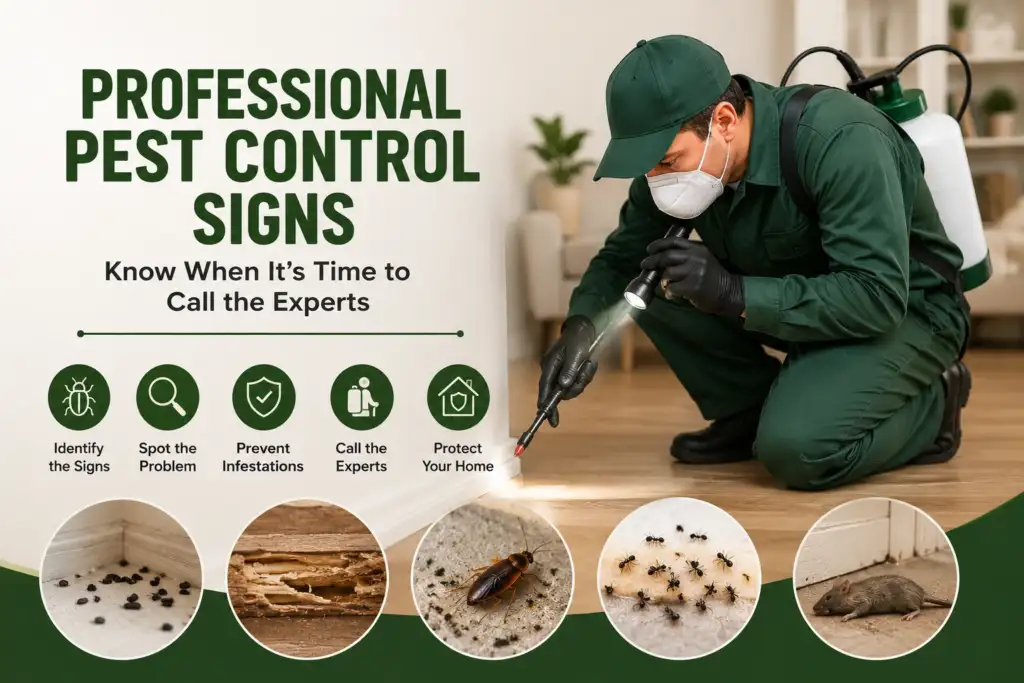
Professional pest control service becomes necessary when homeowners observe these indicators:
- Active pest droppings near food storage areas signal an established colony.
- Gnaw marks on wooden structures or wiring indicate rodent presence.
- Live pests during daylight hours mean the population has exceeded harborage capacity.
- Recurring presence after store-bought treatment proves DIY methods failed.
- Musty odors or hollow-sounding wood reveal hidden termite damage.
Introduction
Professional pest control service becomes necessary when homeowners observe active pest populations, structural damage, or health-risk indicators that DIY methods fail to resolve. Ten specific warning signs indicate the threshold between manageable nuisance and professional intervention. This article identifies each sign and explains the exact actions a licensed technician takes to eliminate the infestation.
Homeowners delay calling technicians because they fear unnecessary costs or believe store-bought sprays handle every infestation. You will learn the exact visual, auditory, and behavioral indicators that separate minor pest presence from full-scale infestation requiring licensed intervention.
10 Clear Signs of Infestation That Require Professional Pest Control
Signs of infestation appear in three categories: visual evidence, auditory signals, and behavioral anomalies. Ten specific indicators cross the line from minor pest presence to full-scale infestation requiring licensed intervention.
- Termite infestation signs include pencil-width mud tubes on foundation walls. Subterranean termites construct these tunnels from soil, wood particles, and saliva to maintain moisture while traveling between the colony and food sources. Hollow-sounding wood when tapped indicates internal tunneling. Discarded wings near windowsills signal a recent swarm. During a residential inspection in Tampa, Florida last July, I observed a licensed technician identify active termite mud tubes measuring 14 inches along a concrete foundation wall. The homeowner had walked past that corner daily for 11 weeks without recognizing the pencil-width tunnels as termite infestation signs.
- Rodent infestation signs include 1/4-inch dark droppings near food sources. Mice and rats leave 40 to 100 droppings per day in concentrated areas. Gnaw marks on baseboards and electrical wiring indicate continuous chewing behavior. Nocturnal scratching in wall cavities confirms active harborage. Rodent activity creates allergen exposure risks through urine and dander accumulation in HVAC systems.
- Bed bug signs include rust-colored stains on mattress seams. These stains result from crushed bugs or blood excrement. Shed skins in mattress crevices reveal molting activity. Bites arranged in linear clusters of three on exposed skin indicate feeding patterns. Bed bugs reproduce every 6 to 8 days, so delayed treatment allows exponential population growth. For more information, see our bed bug signs, symptoms, and hiding spots guide.
- Cockroach infestation signs include egg casings (oothecae) in cabinet corners. Each ootheca contains 10 to 40 eggs. A musty oily odor in kitchen spaces indicates aggregation pheromone buildup. Scurrying activity at night confirms population density beyond normal hiding capacity. German cockroaches produce 4 to 8 oothecae in a 30-week lifespan. Learn more about cockroach types, identification, and hiding spots.
- Visible ant trails leading into wall voids signal colony establishment. Carpenter ants excavate wood to create satellite nests. Trail width exceeding 1/4 inch indicates a mature colony with thousands of workers. See our carpenter ant identification and signs guide for more information.
- Flying insects swarming near indoor light fixtures reveal breeding sites. Termite swarmers emerge in spring. Fungus gnats indicate overwatered plants or drain biofilm. Drain flies breed in organic matter buildup within pipes.
- Unexplained property damage to insulation or wiring indicates rodent or wildlife activity. Squirrels and raccoons tear attic insulation for nesting material. Rodents gnaw wiring insulation, creating fire hazards. A structural damage assessment identifies the species responsible and the extent of compromise.
- Unexplained grease marks along baseboards reveal rodent travel routes. Oils from rodent fur create dark smudges along walls. These marks appear 2 to 4 inches above floor level.
- Piles of sawdust-like material (frass) near wooden structures indicate active wood-boring insects. Carpenter ants and powderpost beetles expel frass from tunnel openings. Fresh frass color distinguishes active infestation from old damage.
- Unusual pet behavior alerts homeowners to hidden pest activity. Dogs and cats detect rodent or insect presence before humans. Pawing at walls, excessive scratching, or focused staring at baseboards indicates pest movement in void spaces. Hidden pest activity can also involve other crawling insects found around homes; see our guide to crawling insects in homes and hidden pests.
DIY Pest Control vs Professional Service: What the Data Shows
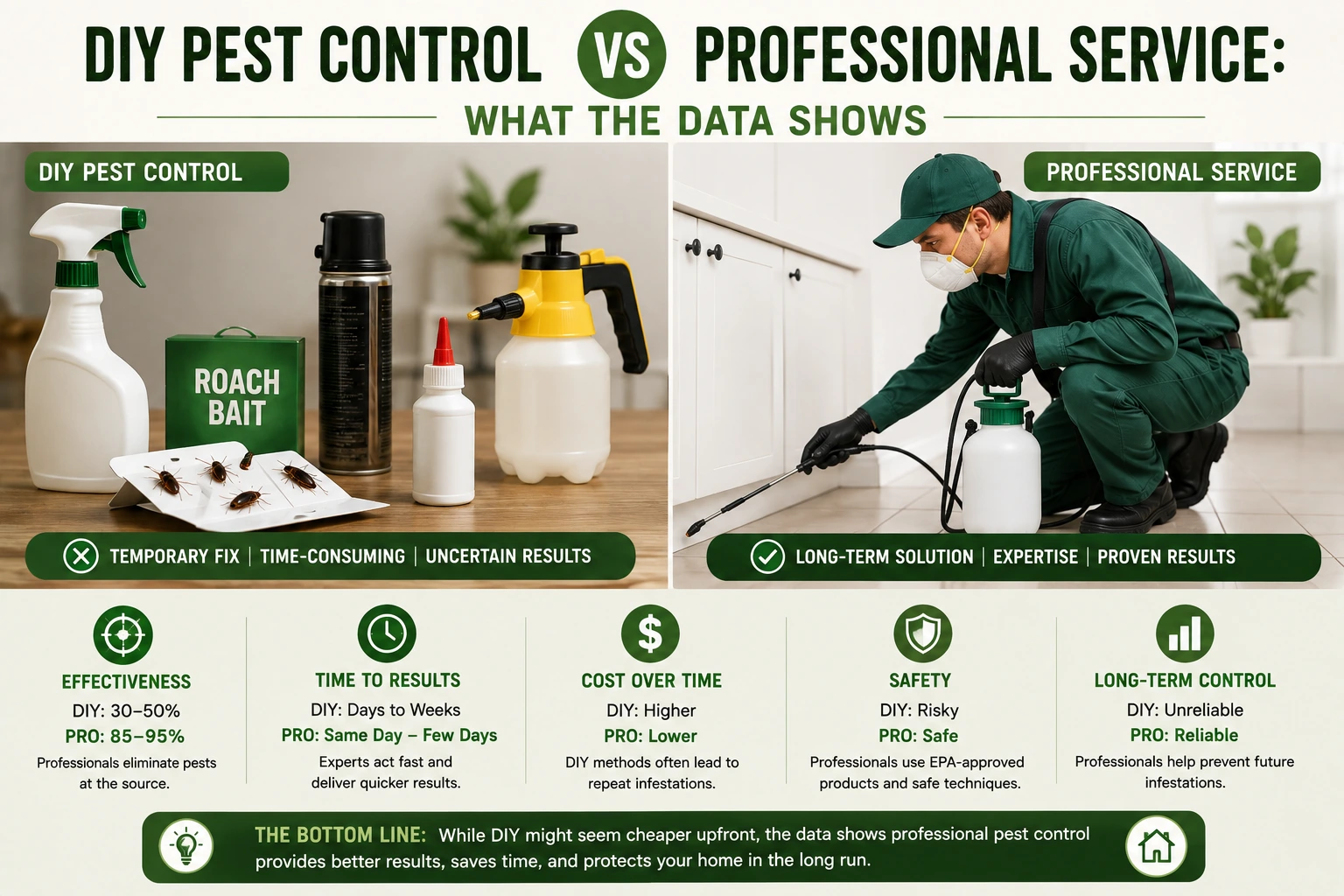
DIY pest control fails to eliminate entire infestations in the majority of cases involving structural pests. Consumer-grade sprays kill visible pests but miss nests, colonies, and egg casings hidden in wall voids or subfloor spaces.
Common Myth: Store-Bought Sprays Eliminate Entire Infestations
Store-bought aerosols reduce visible pest counts temporarily. Colony elimination requires targeted baiting systems and exclusion techniques that licensed technicians apply. Sprays leave chemical residues that repel pests deeper into structures without killing reproductive members.
Licensed Technician Capabilities
Technicians identify pest species, locate harborage areas, and apply EPA-registered treatments in precise concentrations. Professional pest control vs DIY comparisons reveal that recurring infestations cost homeowners 2.3 times more than initial professional treatment. The National Pest Management Association reports that termites cause $5 billion in property damage annually in the United States. Consumer-grade termite treatments fail to eliminate subterranean colonies in 73% of cases where homeowners apply products without professional inspection. Licensed technicians use integrated pest management protocols that consumer products cannot replicate.
EPA-registered pesticides for restricted-use application require state licensure in 47 states. Homeowners who apply these products without certification face federal penalties and exposure risks.
What Professional Pest Control Service Includes
Professional pest control service follows a systematic protocol from inspection through monitoring. The initial inspection covers interior baseboards, attic spaces, crawl spaces, and exterior foundations for pest entry points and damage patterns. Technicians identify pest species, colony locations, and structural vulnerabilities during the assessment. Treatment execution involves targeted application based on integrated pest management principles. Follow-up monitoring schedules prevent reinfestation through ongoing exclusion technique maintenance.
Initial Inspection Protocol
Technicians examine moisture control conditions, sanitation practices, and pest lifecycle stages to determine infestation severity. A home pest inspection documents pest entry points, harborage areas, and environmental factors contributing to infestation. The technician delivers a written report with treatment recommendations.
Treatment Execution and Monitoring
Licensed professionals apply species-specific treatments and schedule quarterly monitoring visits. A pest control professional adjusts treatment protocols based on seasonal pest pressure and property-specific vulnerabilities. Call pest control service providers who offer written treatment plans with measurable outcome benchmarks.
Pest Control Cost for US Homeowners by Service Type
Pest control cost varies by region, pest species, and service frequency. One-time professional pest control service for standard insects costs $150 to $400. Termite inspections cost $75 to $150. Full termite treatments cost $1,000 to $3,000.
One-Time Treatment Pricing
Single-visit treatments address active infestations. Pricing varies by pest species and property square footage. Properties exceeding 4,000 square feet incur surcharges of 15% to 25%.
Recurring Service Plans
Quarterly plans include preventive inspections, barrier treatments, and environmental safety compliance checks. Recurring quarterly plans cost $100 to $300 per visit and include monitoring and prevention. Homeowners in the southeastern United States pay $300 to $500 for initial termite inspections due to higher subterranean termite pressure. Homeowners in the Pacific Northwest pay $250 to $400 for rodent and moisture-related pest services.
When to Call Pest Control: Emergency Indicators and Timing
When to call pest control depends on risk level and seasonal factors. Call emergency pest control immediately when pests pose direct health risks, such as venomous spider sightings or aggressive wasp nests near entryways. Standard scheduling applies when homeowners observe non-urgent signs like isolated droppings or minor ant trails.
Immediate Response Indicators
Structural damage to load-bearing wood, electrical wiring exposure from gnawing, and allergic reactions to pest bites require same-day service. Individuals experiencing allergic reactions to pest bites or stings require immediate medical attention before scheduling pest control service.
Seasonal Timing Factors
Moisture control challenges in spring increase ant and termite activity. Sanitation practices in fall reduce rodent attraction. Seasonal timing affects pest activity. Spring swarms increase termite visibility. Fall temperatures drive rodents indoors. Delayed response allows rodent populations to expand from 2 mice to 60 offspring within 6 months.
Frequently Asked Questions About Professional Pest Control
When should I call a pest control professional?
Call a licensed technician when you observe pest droppings, gnaw marks on wooden structures, nocturnal scratching sounds, or live pests during daylight hours. Ten specific indicators signal the need for professional intervention. Delayed response allows colonies to expand beyond the original harborage area and increases structural damage risks.
How much does pest control cost?
One-time professional pest control service costs $150 to $400 for standard insect treatments. Termite inspections range from $75 to $150. Full termite treatments cost $1,000 to $3,000 depending on property size and infestation severity. Recurring quarterly plans cost $100 to $300 per visit.
What are the signs of infestation?
Active infestation indicators include pest droppings near food sources, shed skins or wings near windowsills, gnaw marks on baseboards, musty odors in confined spaces, and visible mud tubes on exterior walls. Rodents produce scratching sounds in wall cavities at night. Termites leave hollow-sounding wood when tapped.
Do I need pest control for one mouse?
One mouse indicates an entry point exists in your structure. Mice reproduce every 19 to 21 days, producing litters of 6 to 8 offspring. A single sighting typically signals 5 to 12 hidden rodents. Professional pest control service locates entry points, eliminates the existing population, and implements exclusion techniques to prevent recurrence.
What does a pest inspection include?
A licensed technician examines interior baseboards, attic spaces, crawl spaces, and exterior foundations for pest entry points, droppings, damage patterns, and moisture conditions. The inspection identifies pest species, colony locations, and structural vulnerabilities. The technician delivers a written report with treatment recommendations and integrated pest management strategies.
Conclusion
Professional pest control service prevents $5 billion in annual termite damage and eliminates health risks from rodent-borne pathogens before colonies expand beyond control.
Licensed intervention stops structural damage and allergen exposure before repair costs exceed treatment costs by a factor of 10. Homeowners who recognize the 10 warning signs early avoid the 2.3 times higher expense of recurring infestations that DIY methods fail to resolve.
Contact a licensed pest control professional in your area today to schedule an inspection and protect your property from structural damage.