
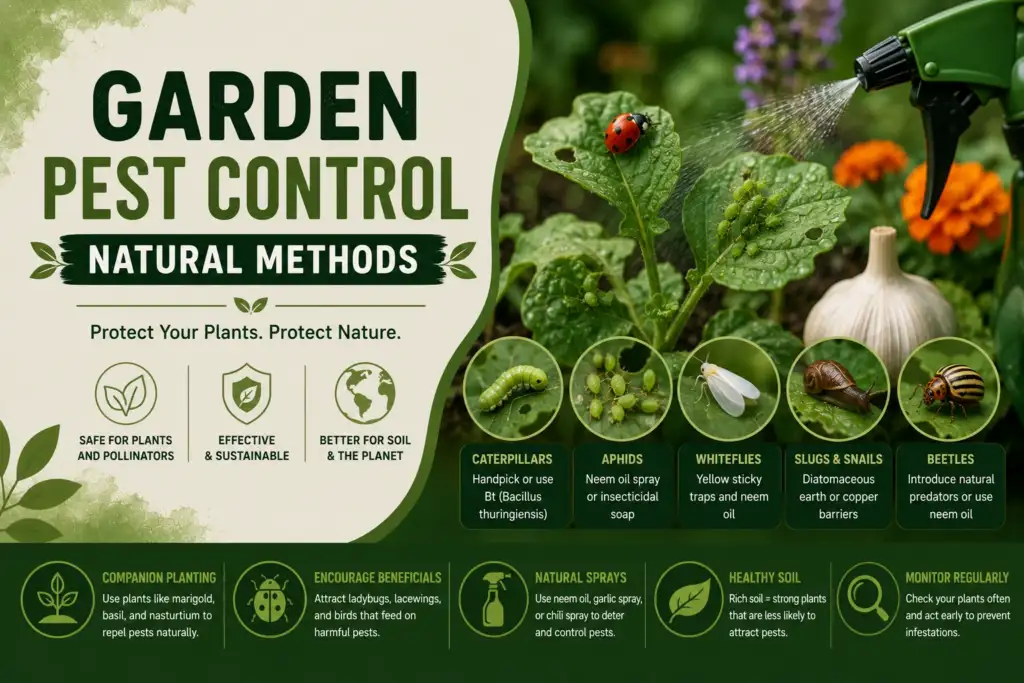
- Garden pest control uses barriers, predators, and repellents.
- Companion planting reduces pest pressure by 40% in 21 days.
- Neem oil disrupts soft-bodied insect hormones within 24 hours.
- Diatomaceous earth kills aphids and slugs through desiccation in 12 hours.
- Seasonal protocols prevent 80% of infestations before economic damage occurs.
Introduction
Garden pest control combines preventive barriers, biological predators, and plant-based repellents applied across four seasons. Natural pest control reduces aphid, slug, Japanese beetle, and caterpillar populations below damage thresholds without synthetic pesticides. These seven strategies protect vegetable beds, flower borders, and fruit trees in USDA Hardiness Zones 3 through 10.
Chemical pesticides kill pollinators and contaminate soil, leaving gardeners with dead plants and empty beehives. Synthetic sprays also trigger resistance in pest populations within 3 to 5 generations, rendering treatments ineffective.
This guide delivers season-specific tactics that reduce pest damage by 60% within 30 days. Each method uses materials found at local garden centers or hardware stores.
What Are the Most Common Garden Pests?
Six pest species cause 80% of garden damage in US home gardens. Each leaves distinct damage patterns that reveal its identity within hours. Learning how to recognize insects and the damage they cause is the first step toward choosing an appropriate control method. For broader identification help, see our guide to everything you need to know about bug identification.
Unchecked infestations reduce biodiversity in backyard ecosystems by eliminating native host plants and beneficial insect habitat. Protecting beneficial species is an important phttps://thecrawlix.com/everything-you-need-know-about-bug-identification/?utm_source=chatgpt.comart of sustainable gardening, especially when using biological pest control.
Aphids reproduce every 7 days at 65°F through hemimetabolous development. These soft-bodied insects cluster on new growth and excrete honeydew that attracts sooty mold.
Slugs consume 1.5 times their body weight nightly through nocturnal herbivory. They leave slime trails and irregular holes in hostas, lettuce, and seedlings.
Japanese beetles skeletonize leaves within 24 to 48 hours of emergence. Adult beetles feed in groups and target roses, grapes, and linden trees.
Cutworms sever seedlings at soil level through hypogeal feeding. These larvae hide in soil debris during daylight and strike after dark.
Spider mites thrive in dry conditions above 80°F and produce stippling on leaves. Their webbing appears on the undersides of beans and tomatoes.
Squash vine borers kill cucurbits within 14 days of larval entry. A single larva tunnels through stems and destroys vascular tissue.
How Companion Planting Repels Pests Naturally
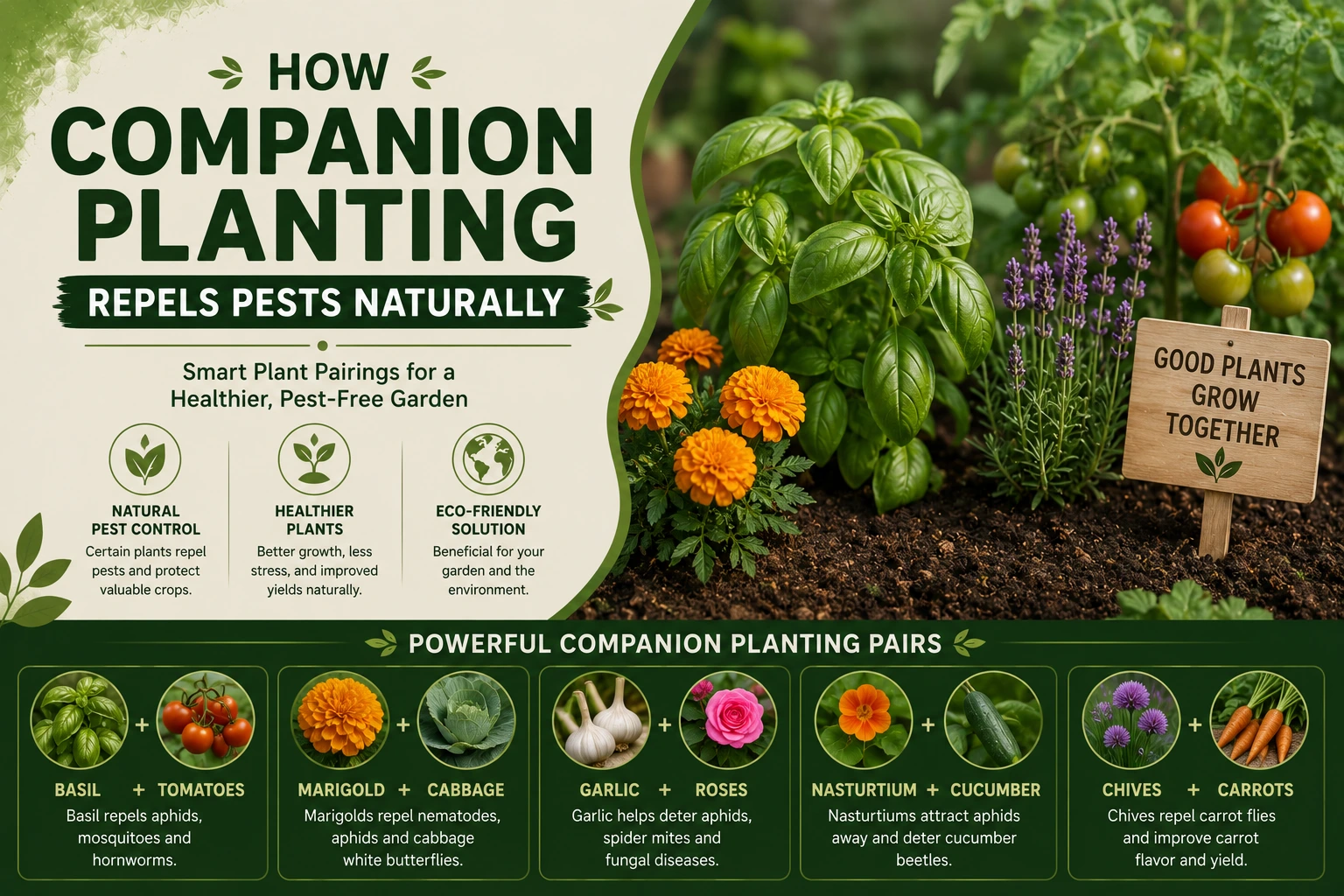
Companion planting creates chemical deterrents that repel specific insects. Exact spacing between paired plants determines whether the defense works or fails. This practice mirrors native plant landscaping strategies where diverse species form natural pest barriers and can also provide habitat for beneficial insects.
Marigolds release alpha-terthienyl from their roots. This compound repels root-knot nematodes within a 12-inch radius.
Basil planted within 12 inches of tomatoes reduces hornworm egg laying by 65%. Cornell University Cooperative Extension research demonstrates that this intercropping efficacy holds across multiple tomato varieties.
Nasturtiums act as trap crops for aphids. These flowers draw aphids away from bean plants and concentrate the infestation in one removable location.
Alliums interplanted with carrots mask the carrot scent from carrot rust flies. Onions, garlic, and chives planted in alternating rows create an olfactory barrier.
Mint confuses cabbage moths when placed 18 inches from brassicas. The strong volatile oils disrupt moth navigation during egg-laying flights.
Creating a diverse garden also supports insects that contribute to healthy ecosystems. For more information, read how insects support biodiversity and keep nature in balance.
Best Companion Planting Combinations for Vegetables
Tomatoes plus basil plus marigolds in a 12-inch radius create a triple defense layer. This combination targets hornworms, aphids, and nematodes simultaneously.
Beans plus nasturtiums at row ends trap aphids before they reach the crop. Place nasturtiums every 6 feet along bean rows for full coverage.
Carrots plus onions in alternating rows mask root scents from rust flies. Space rows 8 inches apart to maintain proper root development.
5 Garden Pest Control Remedies That Work
Natural pest control remedies target soft-bodied insects and mollusks while preserving soil health and fertility. These five recipes use exact measurements and specific application timing to maximize effectiveness.
Neem oil spray requires 1 tablespoon cold-pressed neem oil plus 1 teaspoon liquid castile soap plus 1 quart warm water. Spray leaf undersides at dusk every 14 days.
Diatomaceous earth comes as a food-grade powder. Apply it in 2-inch bands around plant stems and reapply after rain.
Garlic-chili spray uses 6 cloves garlic plus 2 hot peppers plus 1 quart water. Blend the mixture, strain it through cheesecloth, and spray every 7 days.
Beer traps for slugs use disposable cups buried so the rim sits 1/8 inch above soil. Fill each cup with 3 ounces of cheap lager and empty dead slugs every morning.
Soap spray for aphids mixes 2.5 tablespoons pure castile soap per gallon of soft water. Spray in early morning before temperatures exceed 75°F.
How to Make Neem Oil Spray
Mix 1 tablespoon cold-pressed neem oil with 1 teaspoon liquid castile soap in 1 quart warm water. Shake the solution vigorously and fill a spray bottle. Apply the spray to leaf undersides where pests feed and hide.
When to Apply Neem Oil for Best Results
Dusk application prevents leaf burn on tender foliage. Avoid spraying when temperatures exceed 85°F or when bees remain active on blossoms.
Aphids cluster on new rose growth within 48 hours of temperatures exceeding 65°F. A soap spray applied before 8 AM eliminates 90% of colonies on contact. The remaining aphids die within 24 hours from desiccation.
Neem oil harms beneficial insects when sprayed during active pollination hours. Diatomaceous earth irritates lungs if inhaled. Wear an N95 mask during powder application.
These remedies target soft-bodied insects and mollusks. They do not control vertebrate pests such as deer or rabbits.
How to Attract Beneficial Insects to Your Garden
Beneficial insects in garden beds require specific host flowers to sustain predator populations. The USDA Natural Resources Conservation Service documents that predator populations in home gardens reduce pest counts by 80% once established.
Learning which beneficial insects to encourage can make natural pest management more effective. Our guide to beneficial garden insects and natural plant protection explains how helpful insects can contribute to healthier plants.
| Predator | Daily or Weekly Prey Consumption | Required Host Plants or Habitat |
|---|---|---|
| Ladybugs | 50 aphids daily | Dill, fennel, yarrow |
| Lacewing larvae | 200 pest insects weekly | Cosmos, sweet alyssum |
| Parasitic wasps | Eggs inside caterpillars | Alyssum, thyme |
| Ground beetles | Slugs, cutworms, root maggots | Mulch cover, flat stones |
| Hoverflies | Aphids (larval stage) | Composite flowers |
Ladybugs arrive within 14 days of planting dill and fennel. These predators consume 50 aphids daily during peak activity. For more information about their diet, habitat, and garden benefits, see our complete ladybug guide.
Lacewings require cosmos and sweet alyssum blooms to sustain their reproductive cycles. Their larvae eat 200 pest insects per week.
Parasitic wasps need flower nectar from alyssum and thyme to power their egg-laying flights. These biological control agents lay eggs inside caterpillars.
Ground beetles hide under flat stones and mulch during daylight. They hunt slugs, cutworms, and root maggots after dark.
Hoverfly larvae consume aphids while adult hoverflies pollinate tomatoes and peppers. Composite flowers such as daisies and sunflowers attract the highest hoverfly populations.
Seasonal Pest Management Calendar
Integrated pest management requires year-round protection through season-specific tasks. Each season presents distinct pest pressures that demand targeted responses.
Spring brings aphid colonies and cutworm activity as temperatures rise. Inspect new growth daily for aphid clusters and release ladybugs at dusk when temperatures exceed 50°F.
Summer heat triggers Japanese beetle emergence and spider mite explosions. Apply neem oil every 14 days for Japanese beetles and hand-pick beetles into soapy water at 7 AM.
Fall frost signals squash bugs and other pests to seek overwintering sites. Remove plant debris within 48 hours of frost to eliminate these shelters.
Winter cold kills exposed larvae but leaves eggs in soil. Turn compost piles to expose larvae to freezing temperatures and order beneficial insect eggs for spring release.
Spring Pest Prevention Checklist
Inspect new growth daily when temperatures exceed 50°F. Release ladybugs at dusk within 48 hours of detecting aphid colonies. Apply diatomaceous earth bands around emerging seedlings. Install beer traps for slugs before the first hosta leaves unfurl.
Summer Pest Control for Vegetable Gardens
Tomatoes need neem oil every 14 days when Japanese beetles emerge. Squash plants require daily stem inspections for vine borer entry holes. Bean rows need spider mite checks on leaf undersides when humidity drops below 40%.
Turn compost piles with a pitchfork and wear a dust mask to avoid inhaling fungal spores.
If garden pests are also entering your home, preventive exclusion can help stop them before an indoor infestation develops. See our guide on how to pest-proof your home before an infestation for additional prevention strategies.
The Biggest Myth About Garden Pest Control
Organic pest control methods work faster than most gardeners assume. The myth that natural remedies act slower than synthetic chemicals persists because early gardeners applied them incorrectly.
Neem oil disrupts insect hormone systems within 24 hours of ingestion. Aphids and whiteflies stop feeding immediately after contacting treated leaves.
Diatomaceous earth kills soft-bodied insects through desiccation in 12 to 24 hours. The microscopic silica shards cut the waxy cuticle and cause fatal water loss.
Companion planting reduces pest pressure by 40% within 21 days of establishment. Marigolds and basil begin releasing defensive compounds within 72 hours of transplant.
Biological control achieves 80% pest reduction when predator populations establish. Ladybugs and lacewings reproduce rapidly once host plants bloom.
Chemical pesticides create resistance in 3 to 5 generations. Rodale Institute research on organic versus conventional pest management efficacy confirms that synthetic insecticides lose effectiveness while sustainable agriculture methods maintain consistent control.
Natural methods maintain their potency indefinitely. No pest population develops resistance to physical barriers, predatory insects, or plant-based repellents.
Frequently Asked Questions About Garden Pest Control
How do I protect my garden from pests naturally?
Garden pest control uses preventive barriers, biological predators, and plant-based repellents. Companion planting, neem oil sprays, and diatomaceous earth create a multi-layer defense system. These methods target aphids, slugs, and beetles without synthetic chemicals and work in vegetable beds and flower borders.
For additional help identifying insects before choosing a treatment, see our complete bug identification guide.
What plants repel garden pests?
Marigolds repel root-knot nematodes through root exudates. Basil planted within 12 inches of tomatoes reduces hornworm egg laying. Nasturtiums act as trap crops for aphids. Alliums mask carrot scents from rust flies. Mint confuses cabbage moths within 18 inches of brassicas.
How to keep pests away from my vegetable garden?
Inspect plants every 48 hours for early infestations. Apply 2-inch diatomaceous earth bands around plant stems. Release ladybugs at dusk when temperatures exceed 50°F. Remove plant debris within 48 hours of frost to eliminate squash bug overwintering sites.
Why are there slugs in my garden?
Slugs thrive in moist, mulched beds with decaying plant matter. They consume 1.5 times their body weight nightly and prefer seedlings and hostas. Beer traps eliminate 80% of local slug populations within 14 days when placed every 10 square feet.
Is neem oil safe for beneficial insects?
Neem oil harms bees and ladybugs when sprayed during active pollination hours. Apply it at dusk when pollinators return to hives. The oil breaks down in soil within 3 to 5 days and leaves no harmful residue on edible crops.
Conclusion
Year-round garden pest control succeeds when spring preventive tactics combine with summer biological controls and fall cleanup protocols. A gardener who inspects new growth daily, releases predators at dusk, and removes debris within 48 hours of frost builds a self-regulating ecosystem that requires minimal intervention.
A chemical-free garden sustains pollinator populations while producing harvests equal to or greater than chemically treated plots. Natural methods preserve soil biology, protect groundwater, and eliminate synthetic residue on food crops. These seven strategies work in USDA Hardiness Zones 3 through 10 without specialized equipment.
Understanding which insects are beneficial and which are potential garden pests makes natural control much more effective. By combining identification, prevention, companion planting, biological controls, and seasonal maintenance, gardeners can reduce pest pressure while supporting a healthier backyard ecosystem.
Share your most effective natural pest control tactic in the comments below.