
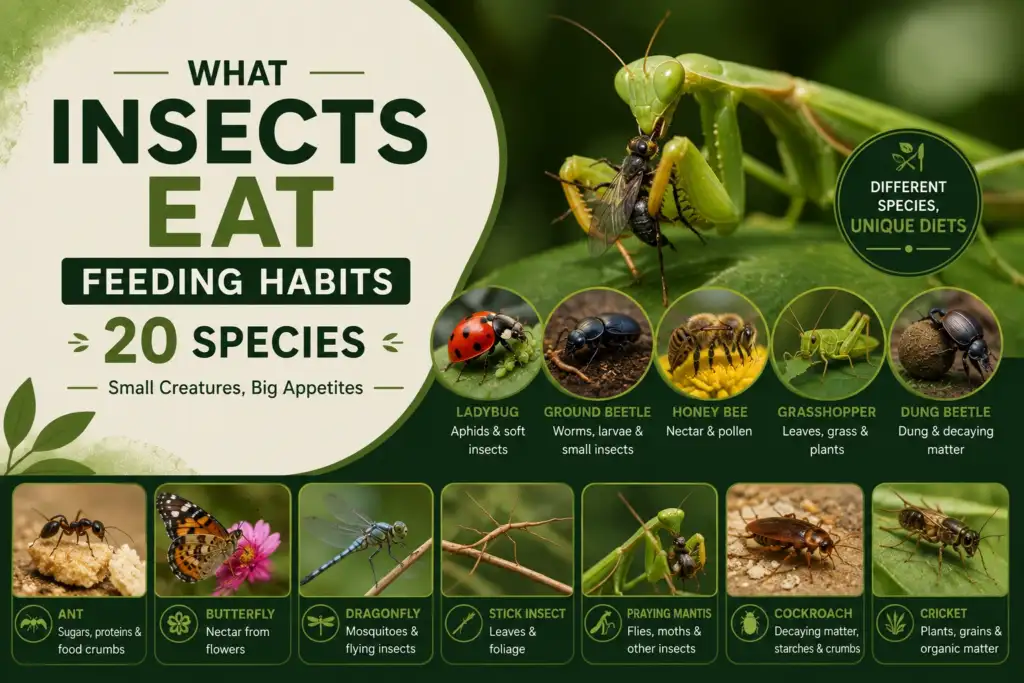
- Insects eat plants, prey, nectar, blood, or decaying matter depending on species.
- Herbivores like grasshoppers chew leaves with specialized mouthparts.
- Carnivores like praying mantises hunt and consume live insects.
- Metamorphosis causes diet shifts: caterpillars eat leaves while adult butterflies drink nectar.
- Decomposers like dung beetles recycle waste into soil nutrients.
Introduction
Insects consume plants, other insects, nectar, blood, wood, and decaying matter depending on their species and life stage. Herbivorous species like grasshoppers chew leaves with hardened mandibles. Carnivorous species like praying mantises capture live prey with specialized forelegs. Omnivorous and detritivorous species adapt their intake to available organic material across soil, leaf litter, and compost.
Most homeowners and gardeners cannot identify why specific insects enter their property or whether those insects threaten their vegetable beds and ornamental plants. The feeding habits of common insects range from leaf consumption to live predation. Readers learning what insects eat will find exact food sources for 20 common species and recognize their ecological role and behavior. For a broader introduction to identifying insects around the home, see this complete insect identification guide.
What Do Insects Eat? A Breakdown by Diet Type
What do insects eat? Insect feeding habits fall into three primary trophic categories: herbivores, carnivores, and omnivores or detritivores. Common garden insects diet selection depends on mouthpart structure.
Each group occupies a distinct trophic level within backyard ecosystems. Herbivores process plant material at trophic level 2. Carnivores consume other insects at trophic level 3. Detritivores recycle dead organic matter into soil nutrients.
| Diet Type | Mouthpart | Example Species | Ecosystem Role |
|---|---|---|---|
| Herbivore | Mandibles | Grasshopper | Primary consumer |
| Carnivore | Raptorial forelegs | Praying mantis | Secondary consumer |
| Nectar feeder | Proboscis | Monarch butterfly | Pollinator |
| Blood feeder | Piercing stylets | Mosquito | Nutrient transfer |
| Detritivore | Sponging mouthparts | Housefly | Decomposer |
Chemoreception via antennae and tarsi allows insects to detect food at distances up to 100 meters in cecropia moths. Mandibles power chewing in grasshoppers by crushing leaves. A proboscis enables liquid feeding in butterflies. Piercing-sucking mouthparts extract sap from phloem tissue in aphids.
Chewing vs. Sucking Mouthparts
Insect mouthparts types determine how insects eat their food. Mandible structure dictates mechanical force. Mandibles crush plant matter in grasshoppers. Proboscises siphon nectar in butterflies.
Sponging mouthparts lap liquefied material in houseflies. How do insects find their food? Chemoreception guides them through chemical cues on antennae and tarsi. These insects feeding habits explained through mouthpart anatomy clarify ecological roles.
Herbivorous Insects: 7 Species That Eat Plants
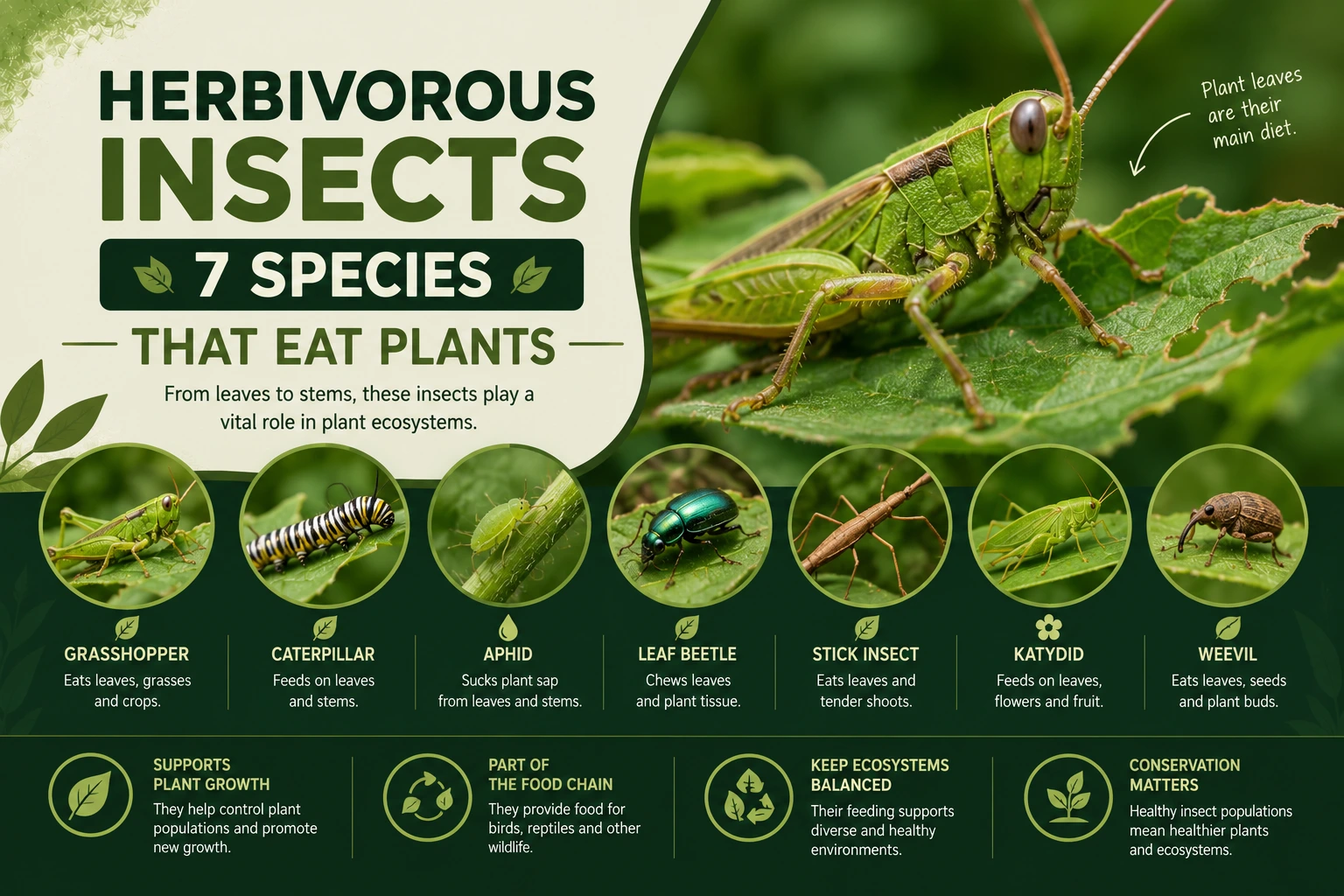
Herbivorous insects consume plant matter through chewing or sap-sucking. These seven herbivorous insects examples demonstrate herbivorous insect diet strategies in US gardens. The following list of herbivorous insect species illustrates what insects eat when they target plants.
- Grasshoppers consume 30% to 40% of their body weight daily in grasses and broadleaf plants. Their mandibles shear leaf edges. What do grasshoppers eat outside? They prefer tender grasses, clover, and garden lettuce.
- Monarch caterpillars eat exclusively milkweed leaves. The University of Florida Entomology and Nematology Department documents that monarch caterpillars exhibit complete dependence on milkweed species containing cardiac glycosides, a defense compound toxic to most vertebrates. This host plant specificity protects monarchs from predation.
- Stick insects mimic twigs while consuming oak, rose, and bramble leaves. These insects that eat plants rely on leaf chemistry for digestion. If you’re interested in another beginner-friendly insect that feeds on plant foliage, see our guide to stick insect care and feeding.
- Aphids pierce phloem tissue with stylets and excrete honeydew. Their feeding stunts growth on roses and tomatoes. Large colonies extract sap continuously from host vascular systems.
- Leaf beetles skeletonize foliage across vegetable and ornamental gardens. Adults and larvae chew holes in eggplant and squash. Leaf eating insects like these reduce photosynthetic capacity rapidly.
- Termites digest cellulose through symbiotic gut protozoa, breaking down wood and leaf litter. What do termites feed on? Subterranean species consume decaying wood and cardboard. Wood eating insects like termites perform detritus decomposition in forest ecosystems.
- Butterfly larvae represent the primary herbivorous life stage for Lepidoptera species. Caterpillars chew leaves on host plants including milkweed and parsley. What do caterpillars eat mostly? They consume the specific leaves their species has evolved to digest.
Wood Boring and Leaf Chewing Herbivores
Wood eating insects like termites process cellulose in dead wood through symbiotic bacteria. Leaf eating insects like leaf beetles target living foliage on vegetables. Both groups shape plant community structure through direct consumption.
Carnivorous Insects: 6 Species That Hunt Prey
Carnivorous insects control pest populations through active hunting, ambush, or parasitoid strategies. The following carnivorous insects list covers six examples of carnivorous insect diet specialization.
- Praying mantises remain motionless before striking prey with raptorial forelegs at 1/20th of a second. What do praying mantises eat? They consume moths and crickets. A 45-minute observation revealed sequential consumption of a live cricket beginning with the head and thorax before discarding the hind legs. The mantis held the prey with its raptorial forelegs and fed intermittently, pausing 2 to 3 minutes between bites.
- Ladybugs consume 50 aphids per day during peak feeding. These insects that eat meat also prey on scale insects and mites. Ladybugs are among the more useful predators found in gardens; learn more about their ladybug diet, lifespan, habitat, and garden benefits.
- Dragonflies capture mosquitoes and midges in flight using basket-shaped leg formations. What do dragonflies eat daily? Adults consume 30 to 100 small insects per day depending on body size.
- Parasitoid wasps lay eggs inside caterpillars. Larvae consume the host from within after hatching. This parasitoid strategy kills the host within 7 to 14 days.
- Assassin bugs inject digestive enzymes into prey and suck out liquefied tissue. Their proboscis pierces beetle larvae. These examples of carnivorous insects demonstrate external digestion.
- Lacewing larvae pierce soft-bodied insects with hollow mandibles and drain body fluids. A single larva consumes 200 aphids per week. Insects that eat other insects like lacewings provide natural pest control.
Active Predators vs. Parasitoid Strategies
Active predators like mantises and dragonflies pursue or ambush prey using vision and speed. Parasitoid wasps use host bodies as nurseries. Both strategies reduce herbivore populations but differ in prey handling timing.
Nectar Feeders, Blood Feeders, and Decomposers: 7 More Species
Nectar feeding insects, blood sucking insects, and decomposers occupy specialized ecological roles.
- Honey bees collect nectar and pollen for colony protein and carbohydrate needs. What do bees eat? Workers consume nectar for flight energy and pollen for brood rearing. These pollen collecting insects drive the pollination process.
- Only female mosquitoes consume blood, which provides protein for egg development. Both sexes drink nectar for energy. Why do some insects eat blood? Blood contains amino acids required for oogenesis. Blood-feeding insects including mosquitoes can transmit West Nile virus, Zika virus, and malaria depending on geographic region. Avoid stagnant water accumulation near residential areas and use EPA-registered repellents when exposure risk is elevated. For more detail on mosquito development and behavior, see our guide to the mosquito life cycle.
- Adult butterflies siphon nectar through a coiled proboscis and cannot chew solid food. What do butterflies eat? Monarchs drink nectar from milkweed and butterfly bush. Nectar feeding insects transfer pollen between blooms during each visit. Their transformation from caterpillar to adult is explained in our guide to the butterfly life cycle.
- Houseflies regurgitate enzymes onto decaying matter and sponge up liquefied nutrients. These decomposer insects list members break down organic waste within 48 hours.
- Dung beetles bury fecal matter underground, reducing fly populations and enriching soil nitrogen. Their detritus decomposition improves pasture quality.
- Crickets eat plant matter, fungi, and dead insects. What do crickets eat outside? Field crickets prefer decaying plant material in late summer.
- Ants function as opportunistic omnivores, farming aphids for honeydew and scavenging dead arthropods. What do ants eat in the wild? Workers harvest nectar and honeydew. What do common house insects eat? Ants seek sugar and protein scraps.
Pollen Collectors and Blood Suckers
Pollen collecting insects like honey bees transport pollen between flowers during nectar collection. Blood sucking insects like female mosquitoes require blood meals for egg production. Both groups serve opposite ecological functions.
Decomposers and Common House Insects
Decomposer insects like dung beetles recycle waste into soil nutrients. Common house insects like ants enter structures seeking carbohydrates. These species reduce waste accumulation.
If you’re trying to distinguish harmless insects from household pests, our guide to common house bugs and how to identify them provides additional identification clues.
How Metamorphosis Changes What Insects Eat
Metamorphosis stages create distinct dietary needs within a single species. Insect feeding habits shift when larvae and adults occupy different ecological niches. The following table compares larval and adult food sources.
| Species | Larval Food | Adult Food | Metamorphosis Type |
|---|---|---|---|
| Monarch butterfly | Milkweed leaves | Nectar | Complete |
| Japanese beetle | Roots and decaying wood | Foliage and pollen | Complete |
| Housefly | Microorganisms in water | Nectar and decaying matter | Complete |
| Grasshopper | Tender shoots | Grasses and broadleaf plants | Incomplete |
The Smithsonian National Museum of Natural History documents that complete metamorphosis creates distinct trophic transfer between larval and adult stages. Larvae and adults occupy different trophic levels. What insects eat in the wild depends on whether the species undergoes complete or incomplete metamorphosis.
Complete vs. Incomplete Metamorphosis Diet Shifts
Complete metamorphosis involves four stages: egg, larva, pupa, and adult. What do caterpillars eat mostly? Monarch caterpillars chew milkweed leaves while adult monarch butterflies drink nectar through a proboscis. Beetle larvae consume roots and decaying wood while adult beetles often shift to foliage.
Incomplete metamorphosis produces nymphs that resemble adults. Grasshopper nymphs and adults both chew plants, though nymphs prefer tender shoots.
Digestive System Adaptations
Larval foreguts and midguts expand to process bulk plant matter during the larval feeding stage. Adult gut volume shrinks in nectar-feeding species. Foregut, midgut, and hindgut proportions shift during pupation to accommodate new adult food sources. These structural changes ensure each life stage extracts maximum nutrition.
Common Myths About Insect Diets
Insects feeding habits explained through scientific observation disprove many popular assumptions. What do ladybugs eat? The answer surprises homeowners who assume these beetles consume only aphids. What do common house insects eat? Most common house insects do not seek human blood.
- Myth: All mosquitoes drink blood. Fact: Only female mosquitoes consume blood. Males feed exclusively on nectar.
- Myth: Butterflies eat solid food like leaves. Fact: Adult butterflies possess a proboscis and consume only liquid nectar, fruit juices, and tree sap.
- Myth: All insects in your home want to bite you. Fact: Ants and crickets enter homes seeking carbohydrates and protein scraps, not blood.
- Myth: Ladybugs eat only aphids. Fact: Ladybugs consume scale insects, mealybugs, and mites when aphid populations drop. Chemoreception allows ladybugs to locate alternative prey through chemical signals.
Frequently Asked Questions About What Insects Eat
What do insects eat?
Insects eat plants, other insects, nectar, blood, wood, and decaying organic matter. Herbivorous species consume leaves and sap. Carnivorous species hunt prey. Omnivorous species adapt to available food sources in their environment. Diet selection depends on mouthpart structure and life stage.
What do ants eat in the wild?
Ants eat nectar, seeds, other insects, and honeydew secreted by aphids. Omnivorous colony members forage for protein sources to feed larvae and carbohydrate sources to fuel adult workers. Worker ants carry solid food particles back to the nest for distribution to queens and brood.
What do bees eat?
Bees eat nectar and pollen. Nectar provides carbohydrates for flight energy. Pollen supplies protein, lipids, and vitamins for larval development and adult nutrition. Honey bees store both resources in hive comb to sustain the colony through winter months.
What do mosquitoes eat?
Adult mosquitoes eat nectar and plant juices. Only female mosquitoes consume blood, which they require for egg development. Both sexes feed on sugar sources for daily energy. Female mosquitoes locate blood hosts through chemoreception and carbon dioxide detection.
What do ladybugs eat besides aphids?
Ladybugs eat scale insects, mealybugs, mites, and insect eggs when aphid populations decline. Adult ladybugs supplement their diet with pollen and nectar when prey is scarce. A single ladybug consumes 50 aphids per day when prey is abundant.
Conclusion
The diet of an insect depends on its species classification, developmental stage, and ecological niche, with most common backyard species falling into distinct herbivorous, carnivorous, or specialized feeding categories. Mandible structure, metamorphosis type, and chemoreception capacity determine whether an individual consumes leaves, prey, or nectar. Trophic level positioning shapes how each species interacts with plants and other insects.
You can now identify any of these 20 species by their food source and understand their role in your local ecosystem. Recognition of herbivorous, carnivorous, and detritivorous feeding strategies allows you to distinguish beneficial predators from plant pests. This knowledge supports informed pest management decisions.
Comment below with the most surprising insect diet you discovered.