
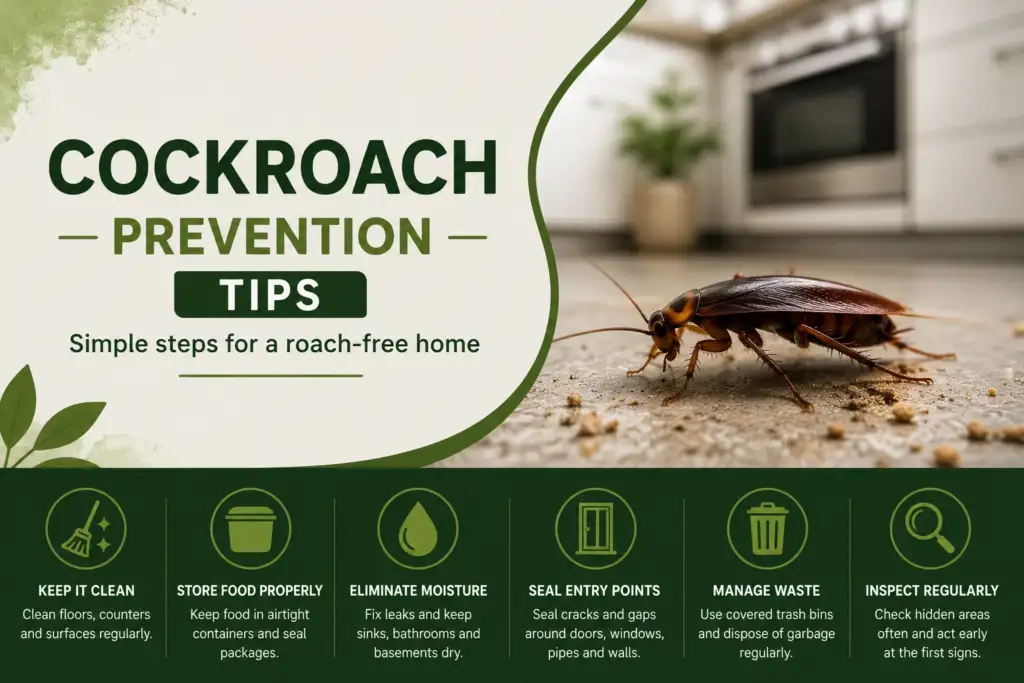
- Seal gaps wider than 1/16 inch around pipes, doors, and windows
- Store all food in airtight glass or hard plastic containers
- Fix leaks and maintain humidity below 50%
- Apply boric acid or gel bait in hidden, inaccessible areas
- Inspect for droppings and egg cases monthly
Introduction
Cockroach prevention eliminates the three conditions roaches need to survive: accessible food, water sources, and harborage points. The Centers for Disease Control and Prevention recommends sealing cracks, storing food in airtight containers, and eliminating standing water as primary prevention actions. The following seven methods apply each recommendation with exact measurements and schedules. Most homeowners react to visible roaches instead of blocking the entry and survival conditions that attract them. If you’re unsure whether the insect you’re seeing is actually a cockroach, start with this common house bugs identification guide before choosing a treatment strategy. You will learn exact measurements, product types, and inspection schedules that stop infestations before they establish.
Seal Entry Points Cockroaches Use
Cockroach bodies flatten to 1/16 inch, allowing passage through gaps invisible to casual inspection. Thigmotaxis drives roaches to travel along walls and squeeze into tight spaces. Weatherstripping on doors requires replacement every 2-3 years. Utility line penetrations need steel wool plus caulk. Window screens need 18×16 mesh minimum. For a broader look at how crawling insects use hidden spaces inside homes, see our guide to crawling insects and hidden household pests.
- Inspect door frames and replace weatherstripping that shows cracks or compression gaps wider than 1/16 inch.
- Stuff steel wool into utility line penetrations around pipes and cables, then seal with silicone caulk.
- Install or repair window screens using 18×16 mesh to block entry while maintaining airflow.
- Apply caulk along baseboards, cabinet backs, and wall junctions in kitchens and bathrooms.
- Check under sinks for gaps around drain lines and fill them with expanding foam or caulk.
For additional prevention strategies focused on stopping pests before they establish themselves, see our guide on how to pest-proof your home before an infestation.
Remove Food Sources and Eliminate Moisture
Gregarious behavior causes roaches to aggregate where food particles accumulate. Airtight glass or hard plastic containers block scent trails. Pet food left out overnight provides complete nutrition for German cockroach colonies. Garbage requires a lid with a rubber seal and emptying every 48 hours. German cockroaches survive 42 days without food but only 7 days without water. Under-sink leaks produce 1-3 ounces of daily moisture, enough to sustain a colony. Dehumidifiers set to 50% relative humidity or below remove atmospheric moisture. Condensation on pipes requires foam insulation sleeves. Floor drains need weekly water flushing to maintain the P-trap seal.
- Store all pantry items in airtight glass or hard plastic containers with locking lids.
- Remove pet food bowls after 30 minutes of feeding time; do not leave food out overnight.
- Use garbage cans with rubber-sealed lids and empty them every 48 hours maximum.
- Fix under-sink leaks within 48 hours of detection.
- Run dehumidifiers at 50% relative humidity or below in basements, crawl spaces, and bathrooms.
- Wrap cold water pipes with foam insulation sleeves to eliminate condensation.
- Pour 1 cup of water down floor drains weekly to maintain the P-trap seal and prevent sewer gas entry.
Recognize Early Signs of Cockroach Activity
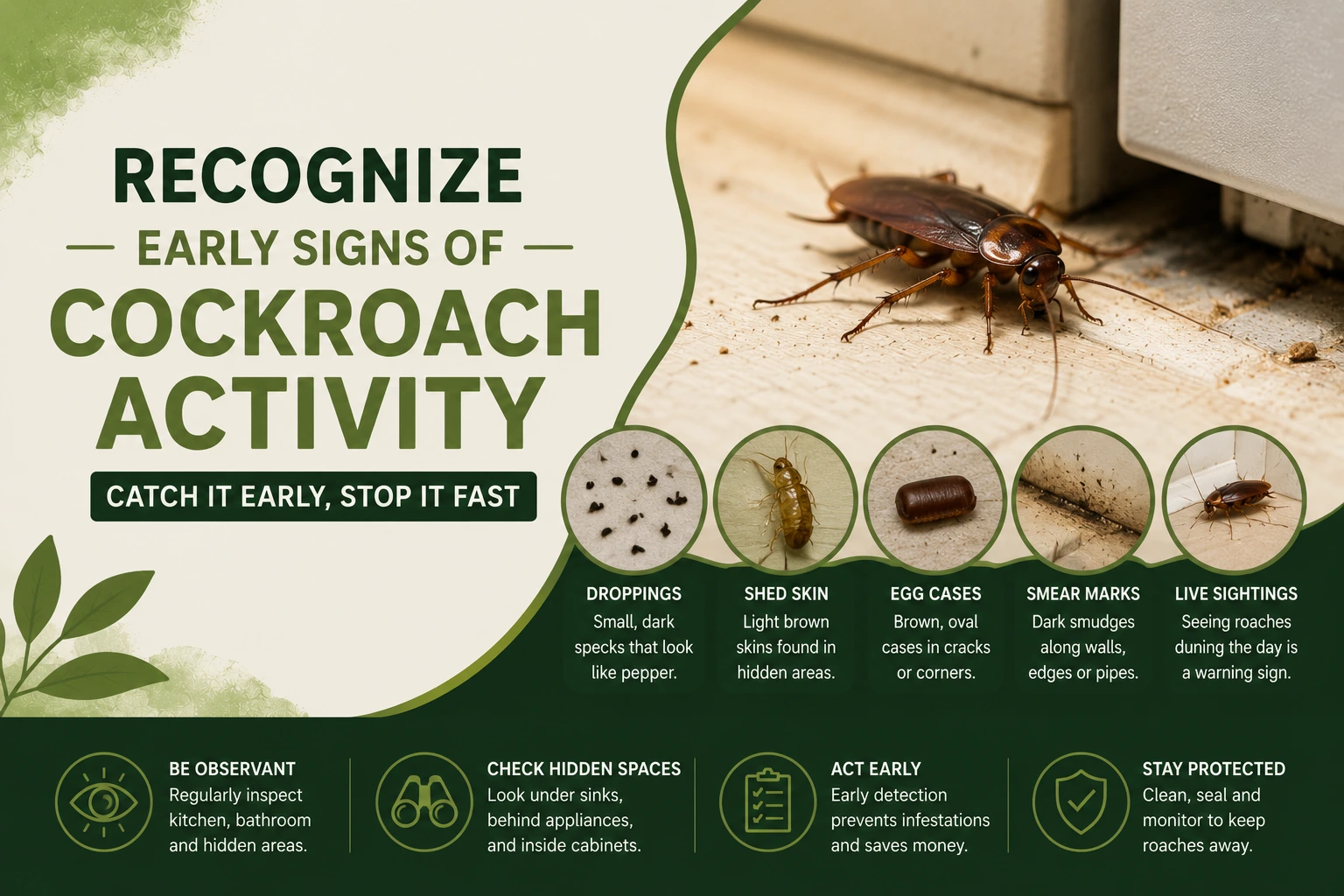
German cockroach droppings resemble black pepper or coffee grounds. American cockroach droppings are cylindrical with blunt ends, 2-3 mm long. Ootheca (egg cases) contain 10-48 eggs dependingon species. Shed skins accumulate near harborage points. A musty, oily odor indicates established populations.
If you need help distinguishing the two common species before interpreting these signs, compare their appearance, behavior, and preferred hiding places in our guide to American cockroach vs. German cockroach. You can also review the main cockroach types, identification features, and hiding spots for additional identification clues.
| Indicator | German Cockroach | American Cockroach |
| Droppings appearance | Black pepper or coffee grounds | Cylindrical with blunt ends, 2-3 mm |
| Egg case (ootheca) | 30-48 eggs per case | 10-16 eggs per case |
| Shed skins | Found near warm appliances | Found in damp basements and drains |
| Odor | Musty, oily smell at high populations | Similar musty odor in heavy infestations |
The Asthma and Allergy Foundation of America reports that cockroach allergy affects 17 to 41% of the United States population. The Centers for Disease Control and Prevention identifies cockroach allergens as proteins found in feces and saliva that trigger asthma symptoms in sensitized individuals. Early detection of droppings, ootheca, or shed skins allows intervention before allergen levels rise.
The Clean Home Myth That Delays Real Prevention
German cockroaches hitchhike in grocery bags, cardboard boxes, and used appliances. Multi-unit buildings share wall voids that allow colony movement between units. Water alone sustains cockroaches for weeks without food. Apartment dwellers in buildings constructed before 1980 face shared wall voids that single-family homeowners do not.
A spotless kitchen does not guarantee protection. German cockroaches enter homes through infested cardboard, grocery bags, and secondhand electronics. Multi-unit buildings built before 1980 contain continuous wall voids that act as highways between apartments. Water from a single dripping pipe sustains a colony for 7 days without any food source. Single-family homeowners control their entire structure. Apartment dwellers in pre-1980 buildings require coordination with neighbors and property management to achieve full cockroach prevention.
Apply Control Methods and Know When to Call a Professional
Boric acid kills cockroaches within 72 hours of ingestion through grooming behavior. Food-grade diatomaceous earth abrades the waxy cuticle, causing dehydration in 24-48 hours. Gel bait dots placed every 12 inches inside cabinets target foraging routes. Insect growth regulators prevent nymphs from reaching reproductive maturity. Essential oils show limited efficacy in peer-reviewed studies. Daytime sightings indicate a population exceeding 1,000 individuals. Multi-unit buildings require coordinated treatment across adjacent units. The National Pest Management Association reports cockroach control generates 25% of U.S. structural pest control service revenue.
Natural Cockroach Repellents and Barriers
Food-grade diatomaceous earth works as a physical desiccant. A thin line of food-grade diatomaceous earth applied along baseboards in a 1,200-square-foot home reduced visible German cockroach activity from 8 nightly sightings to 1 within 72 hours. Apply a barely visible dust film along baseboards, under appliances, and inside cabinet voids. Essential oils such as peppermint and eucalyptus show repellent effects in laboratory settings but lack consistent field efficacy in peer-reviewed studies.
Chemical Baits and Insect Growth Regulators
Gel bait delivers a slow-acting toxin that roaches carry back to harborage areas. Place gel bait dots every 12 inches along the back corners of cabinets and behind appliances. Insect growth regulators disrupt molting hormones and prevent nymphs from developing into reproductive adults. Boric acid and gel baits require placement in inaccessible areas when children or pets are present. Food-grade diatomaceous earth requires application as a thin film, not piles, to avoid respiratory irritation.
Professional Intervention Thresholds
Daytime sightings signal a population exceeding 1,000 individuals and indicate that DIY methods alone will not suffice. Multiple ootheca found in a single inspection mean an established breeding population is active. Multi-unit buildings require coordinated professional treatment across adjacent units because wall voids allow roaches to retreat and re-infest. If you’re unsure whether the situation has reached the point where professional treatment is appropriate, review these signs you need professional pest control before deciding on your next step.
Build a Complete Cockroach Prevention System
Integrated pest management combines exclusion, sanitation, and targeted treatment. Monthly perimeter inspections take 15 minutes. Seasonal weatherstripping replacement prevents new entry. Documented treatment history helps professionals diagnose recurring issues.
- Schedule 15-minute monthly inspections of baseboards, under sinks, and appliance areas.
- Replace weatherstripping every 2-3 years and re-caulk gaps seasonally.
- Keep a written log of all treatments, product types, and application dates.
- Combine exclusion (sealing), sanitation (food and moisture control), and targeted treatment (baits or dusts) into one coordinated plan.
Frequently Asked Questions About Cockroach Prevention
How do I stop cockroaches from invading my home?
Seal gaps wider than 1/16 inch, store food in airtight containers, fix leaks within 48 hours, and apply boric acid or gel bait in hidden areas. These four actions eliminate the food, water, and harborage roaches need.
What attracts cockroaches to my house?
Accessible food residue, standing water, cardboard harborage, and warmth above 70 degrees Fahrenheit attract cockroaches. German cockroaches hitchhike in grocery bags and boxes.
Does boric acid really kill cockroaches?
Boric acid kills cockroaches within 72 hours of ingestion. Roaches walk through the powder, groom their legs, and ingest the toxin. Apply a barely visible dust layer, not piles.
How often should I clean to prevent cockroaches?
Wipe kitchen counters nightly. Sweep floors daily. Deep-clean appliances weekly. Empty garbage every 48 hours maximum.
When should I call a professional exterminator?
Call a professional when you see cockroaches during daylight, find multiple egg cases, or live in a multi-unit building where infestations spread through shared walls.
Conclusion
Cockroach prevention succeeds when homeowners eliminate the three survival requirements (food, water, harborage) before roaches establish breeding populations. A prevention-focused approach costs 80% less than treating an established infestation. Share your biggest cockroach prevention challenge in the comments, and tell us which method from this guide you will implement first.