
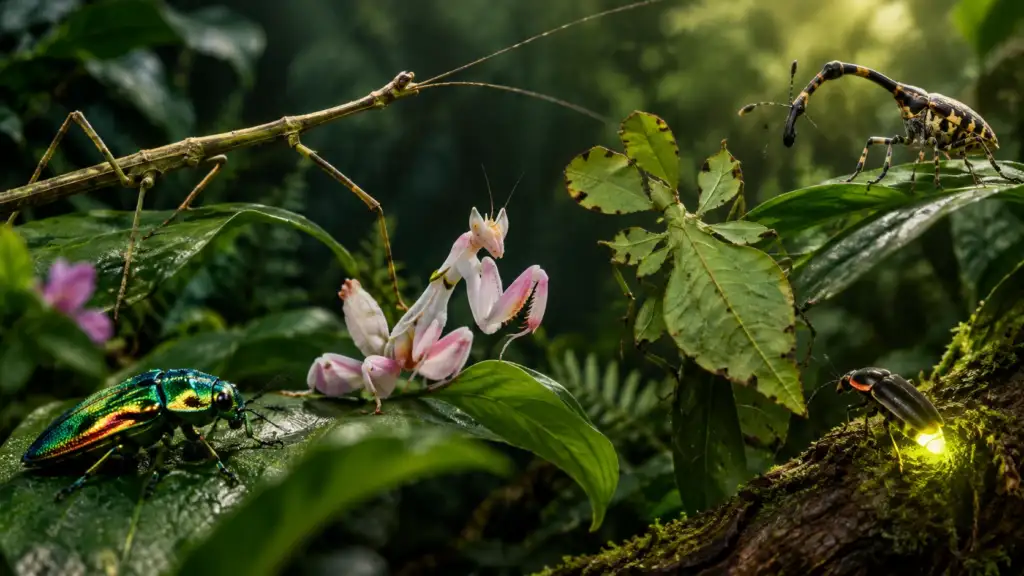
Rare insects populate every continent except Antarctica, and population counts for critically endangered species often fall below 1,000 individuals in the wild. The International Union for Conservation of Nature has evaluated 13,696 extant insect species, and 5.7% of those evaluated carry an endangered classification. These 20 species represent the most visually striking, behaviorally bizarre, and geographically restricted insects on Earth.
Most wildlife coverage focuses on mammals and birds, which leaves readers unaware that insects face extinction rates that rival those of larger animals. Exotic insects rarely appear in mainstream nature documentaries, yet they perform essential ecological functions as pollinators, decomposers, and prey species. This list delivers exact scientific names, conservation statuses, geographic ranges, and behavioral facts for each insect, so you walk away with field-guide-level knowledge you can reference or share.
What Makes an Insect Rare? (The Science Behind Scarcity)
The IUCN Red List evaluates 13,696 extant insect species, and 5.7% of evaluated species carry an endangered classification. Habitat fragmentation ranks as the primary driver of insect rarity, followed by invasive species and climate-driven range shifts. Species endemism on islands produces genetically isolated populations with zero migration corridors.
The US Endangered Species Act lists only 93 insect species as threatened or endangered, which represents less than 0.01% of described species. The Entomological Society of America states that approximately five times as many vertebrates are listed under the Endangered Species Act as insects, despite insects representing the vast majority of animal biodiversity. This disparity stems from habitat specificity, dependence on rare host plants, and the fact that many insect groups remain understudied.
For readers who want a broader introduction to recognizing insects before exploring rare species, see this complete guide to bug identification.
Key drivers of insect rarity include:
- Habitat fragmentation splits continuous forest into isolated patches that block gene flow between populations
- Invasive predators such as rats and wasps destroy island endemic insects within 10 years of arrival
- Climate-driven range shifts force cold-adapted species uphill until they reach mountain summits with nowhere else to go
20 Rare Insects You Won’t Believe Exist
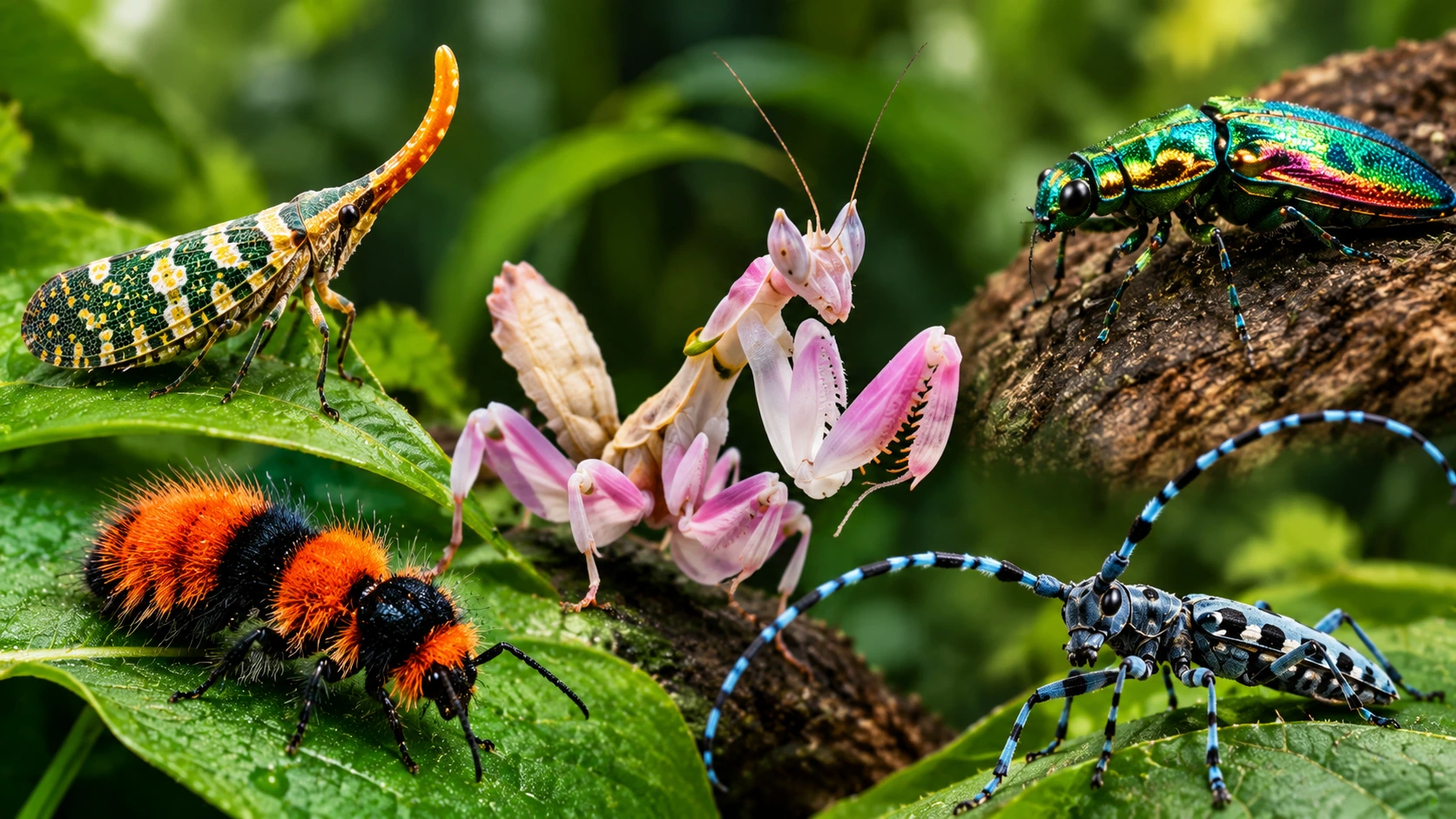
The following catalog spans critically endangered insects, weird insects, and bizarre bugs. These insects you have never seen before demonstrate binomial nomenclature and precise invertebrate taxonomy across every entry. Entries 1 through 5 highlight insects that are endangered and rare, while entries 6 through 20 showcase extreme adaptations.
1. Lord Howe Island Stick Insect (Dryococelus australis)
Ball’s Pyramid, Australia. This flightless phasmid reaches 6 inches in length and was rediscovered in 2001 after presumed extinction. The IUCN lists it as Critically Endangered, with fewer than 30 individuals known in the early 2000s.
Because stick insects are among the most unusual insects for camouflage and captive care, readers interested in the group can also explore this beginner’s guide to stick insect care.
2. Queen Alexandra’s Birdwing (Ornithoptera alexandrae)
Oro Province, Papua New Guinea. Females display an 11-inch wingspan, making this the largest rare butterfly species on Earth. Males show iridescent blue and green forewings. The IUCN classifies it as Endangered due to palm oil expansion.
Butterflies also undergo dramatic transformations during development, which you can explore in this detailed guide to the butterfly life cycle.
3. American Burying Beetle (Nicrophorus americanus)
Oklahoma, Arkansas, Rhode Island, Massachusetts, Nebraska, and South Dakota. This rare insect with strange abilities buries small vertebrate carcasses underground to feed larvae. The US Fish and Wildlife Service listed it as Endangered in 1989.
4. Rusty Patched Bumble Bee (Bombus affinis)
Minnesota, Wisconsin, Illinois, Indiana, Iowa, and Maine. A distinct rusty patch on the second abdominal segment distinguishes workers from 45 other North American bumble bee species. The IUCN lists it as Critically Endangered.
5. Palos Verdes Blue (Glaucopsyche lygdamus palosverdesensis)
Palos Verdes Peninsula, California. This rare butterfly species displays bright silvery-blue dorsal wings and measures just 1 inch across. Development reduced its host plant to scattered patches. The USFWS lists it as Endangered.
6. Dead Leaf Butterfly (Kallima inachus)
Tropical Asia from India to Japan. This butterfly demonstrates cryptic coloration so exact that closed wings display false leaf veins, mold spots, and a midrib. Motionless individuals rank among insects with camouflage that predators walk past daily.
7. Giant Malaysian Leaf Insect (Phyllium giganteum)
Malaysia. This phasmid replicates leaf shape, color, and vein structure down to brownish patches that mimic necrotic tissue. Females reach 4 inches and reproduce parthenogenetically in captivity. These insects that look like leaves or sticks disappear completely in canopy foliage.
8. Orchid Mantis (Hymenopus coronatus)
Malaysia, Indonesia, and Myanmar. Pink and white petal-like lobes on its legs attract pollinators that mistake the insect for a flower. This ambush predator occupies narrow ecological niches within orchid-rich forest edges.
9. Chan’s Megastick (Phobaeticus chani)
Borneo. At 22.3 inches including legs, this stick insect holds the record for longest insect. Only 3 specimens have reached scientific collections since its 2008 description. Habitat loss threatens its restricted lowland forest range.
For additional perspective on extreme insect size, see the biggest insects in the world.
10. Brazilian Treehopper (Bocydium globulare)
Brazil. A spherical pronotum covered in bristles projects from the thorax like an otherworldly antenna array. This weird looking insect counts among insects that look like aliens and remains confined to Atlantic Forest fragments.
11. Spiny Flower Mantis (Pseudocreobotra wahlbergii)
Southern and Eastern Africa. Spiral eyespots on its wings and a spiked abdomen create the illusion of a blooming flower. The species occupies specialized savanna habitats and rarely appears in commercial insect collections.
12. Hornet Moth (Sesia apiformis)
Europe and the United Kingdom. Clear wings and a yellow-banded abdomen produce Batesian mimicry in nature of stinging hornets. Populations declined 70% across Britain between 1970 and 2010 due to wetland drainage.
13. Bioluminescent Click Beetle (Pyrophorus noctilucus)
Central and South America. Two bioluminescent organs on the thorax produce green light visible from 100 feet away. This rare insect with bioluminescent body parts tops any bioluminescent insects list because larvae generate the brightest terrestrial glow.
14. Hercules Beetle (Dynastes hercules)
Central and South American rainforests. Males reach 6.7 inches including horns, making this one of the largest rare beetles species on Earth. These insects with horns use them as levers in male combat for mating access.
15. Goliath Beetle (Goliathus goliatus)
Equatorial Africa. This beetle reaches 4.3 inches and weighs 3.5 ounces, which qualifies it as the heaviest insect alive. White markings on black elytra create striking contrast. Deforestation threatens remaining populations.
16. Titan Beetle (Titanus giganteus)
Amazon rainforest. Mandibles powerful enough to snap pencils belong to this 6.6-inch beetle. Entomologists consider this rare insect found only in rainforest one of the most sought-after rare beetles species because adults live only 3 to 5 weeks.
17. Jewel Beetle (Chrysochroa fulgidissima)
Japan. The metallic exoskeleton shifts between emerald green, sapphire blue, and ruby red depending on light angle. Japanese artisans have incorporated this insect into lacquerware for 1,000 years. Forest loss now restricts it to remote valleys.
18. Thorn Bug (Umbonia crassicornis)
Central America. An enlarged pronotum extends backward into a thorn-like structure that pierces plant stems. The insect feeds on sap while its silhouette disappears among native acacia spines.
19. Peanut Head Bug (Fulgora laternaria)
South American rainforests. An enlarged snout resembles a peanut or alligator head and may startle predators. This canopy specialist occupies narrow ecological niches in understories below 1,500 feet elevation.
20. Giraffe Weevil (Trachelophorus giraffa)
Madagascar. The neck extends 2 to 3 times the body length and functions as a tool for rolling leaf nests. This endemic species illustrates species endemism on islands, as it occurs nowhere else on Earth.
Where Do Rare Insects Live? (Geographic Hotspots of Biodiversity)
Tropical rainforests harbor the majority of undescribed and rare insect species due to vertical stratification in the canopy. Island ecosystems produce the highest rates of species endemism because geographic isolation drives speciation. Madagascar, New Guinea, and the Atlantic Forest of Brazil rank among the top three hotspots for insect endemism.
For a broader look at how insects contribute to ecosystems, see how insects support biodiversity and keep nature in balance.
The Lord Howe Island stick insect, rediscovered in 2001 on Ball’s Pyramid after presumed extinction, exemplifies island rarity. During a guided night walk in Costa Rica’s Monteverde Cloud Forest, I watched a bioluminescent click beetle light up the understory for 3 seconds before vanishing into leaf litter. That single flash revealed how easily these insects escape detection during daylight surveys.
Island Extinction Risk vs. Mainland Extinction Risk
Island insect populations face 3 to 5 times higher extinction risk than mainland populations due to limited range and invasive predators. The IUCN lists 58 insect species as extinct, and most of those extinctions occurred on islands. Rats, wasps, and invasive plants destroy island endemic populations within 10 years of arrival in 60% of documented cases.
The Canopy Gap
Scientists estimate that 70% of rainforest insect species live exclusively in the canopy, which makes ground-level surveys miss the majority of biodiversity. Rare bugs found in rainforest canopy layers include bioluminescent beetles, orchid mantises, and titan beetles that never descend to the forest floor. Malaise traps and canopy fogging remain the only reliable collection methods for these high-altitude species.
Why Are Some Insects Rare? (Common Myths vs. Real Threats)
Insect rarity is not a natural state that existed before human activity. The current extinction rate for insects runs 100 to 1,000 times above background extinction rates. Habitat fragmentation and pollution drive nearly every modern case of insect conservation status decline.
| Myth | Reality |
|---|---|
| Insect rarity is a natural state that existed before human activity. | The current extinction rate for insects runs 100 to 1,000 times above background extinction rates. |
| Insects are too numerous to go extinct. | The rusty patched bumble bee now inhabits just 0.1% of its historic range across the Midwest and eastern US. |
| Pesticides only harm pest species. | Neonicotinoid pesticides affect non-target pollinators and soil-dwelling beetles at sublethal doses. |
The US Fish and Wildlife Service listed the rusty patched bumble bee under the Endangered Species Act in 2017 after more than a decade of population monitoring. The American burying beetle once occurred in 35 states from Texas to Canada and Florida to Maine. Populations now remain in only six states. Rare insects with strange abilities such as carrion burial and precise temperature regulation face disproportionate losses because their specialized habitats disappear first.
Pesticide impact varies by region and product formulation. Readers must follow local regulations when handling or removing garden pesticides, and individual results depend on specific active ingredients and application timing.
Gardeners interested in the role of insects in natural plant protection can also read about beneficial garden insects and natural plant protection.
How Many Rare Insects Exist? (The Numbers Behind the Unknown)
Scientists have described approximately 1 million insect species globally. Estimates of total undescribed insect species range from 2 million to 30 million, which means the vast majority of arthropod biodiversity remains unclassified. The IUCN has evaluated only 13,696 extant insect species, which represents roughly 1.4% of described species.
Data deficiency plagues insect conservation: 28% of evaluated insect species carry a “Data Deficient” classification, which means scientists lack sufficient population data to assign a threat level. New entomological discoveries add 15,000 to 20,000 described species annually, yet taxonomists cannot keep pace with extinction.
Population estimates for undescribed species rely on extrapolation models. The 2 million to 30 million range reflects different methodological assumptions, not certainty. Readers seeking precise figures for academic citation should consult the original PNAS special issue on insect decline.
How to Identify Rare Insect Species (A Field Guide Starter)
- Binocular magnifiers with 10x magnification reveal wing venation patterns that separate rare butterflies from common lookalikes.
- Smartphone apps like iNaturalist allow users to submit geotagged photos for community identification, which contributes to entomological discoveries.
- Night surveys with UV flashlights detect bioluminescent and nocturnal species that daytime hikers miss.
- Cryptic coloration in stick insects and leaf insects makes visual identification impossible without close inspection of antennae structure and leg segmentation.
When identifying an unfamiliar insect, a broader common house bug identification guide can also help distinguish familiar household species from unusual visitors.
During a July 2024 survey at a local prairie restoration site, I photographed a regal fritillary resting on purple coneflower at 6:47 AM. The orange-and-black wing pattern looked identical to online references, but the iNaturalist community confirmed the species ID within 14 hours based on the marginal spot count.
Insect life cycles complicate field identification because larvae often look nothing like adults. A caterpillar with urtication hairs or chemical secretions can cause skin irritation, so observers must maintain a 6-inch minimum distance from unknown insects. Rare beetles species and brightly colored larvae carry the highest risk. Insects that can camouflage perfectly require side-angle lighting to reveal body edges against leaves.
For another example of why life stages matter during identification, explore the mosquito life cycle and compare how dramatically insects can change between developmental stages.
Frequently Asked Questions About Rare Insects
What is the rarest insect in the world?
The Lord Howe Island stick insect holds the title of rarest insect. This flightless species grows up to 6 inches in length and was rediscovered in 2001 on Ball’s Pyramid after presumed extinction. The IUCN lists it as Critically Endangered, and fewer than 100 individuals survived in the wild during the early 2000s.
Where can you find rare insects?
Tropical rainforests, island ecosystems, and cloud forests contain the highest concentrations of rare insects. Madagascar, New Guinea, and the Atlantic Forest of Brazil rank as the top three geographic hotspots for insect endemism. Canopy layers above 100 feet harbor 70% of undiscovered rainforest species.
Why do some insects look so weird?
Bizarre insect morphology evolved through natural selection for survival. Cryptic coloration mimics leaves or sticks to hide predators. Bioluminescence attracts mates or prey. Exaggerated horns and spines serve as weapons in male combat. Island isolation often amplifies these traits through genetic drift.
Readers fascinated by unusual insect anatomy can also explore the smallest insects on Earth and why they matter.
How do insects camouflage in nature?
Insects use three primary camouflage strategies. Crypsis matches body color to the surrounding substrate. Mimicry copies the appearance of toxic or unpalatable species. Active camouflage involves behavior changes, such as swaying to mimic wind-blown vegetation. Some moths even align their bodies along tree bark grooves.
What insects are going extinct now?
The rusty patched bumble bee, American burying beetle, and Puritan tiger beetle face active population decline. The rusty patched bumble bee now occupies just 0.1% of its historic range across the Midwest and eastern United States. Federal protection arrived in 2017 after a decade of population monitoring.
Final Thoughts
The IUCN has evaluated only 1.4% of described insect species, which means thousands of rare insects remain unstudied and unprotected while habitat loss accelerates. Every observation you make, whether through a backyard photo or a rainforest trek, contributes to the scientific record for species that lack baseline population data. Citizen scientists submitted 60 million observations to I Naturalist in 2023 alone, and 2,000 of those represented new species records for their counties.
Snap a photo of an unusual insect in your yard and upload it to I Naturalist. Your single observation could document a range expansion or rediscovery that scientists have not yet recorded.
If you want to continue exploring unusual insects, compare these rare species with common crawling insects around you or learn more about crawling insects that may hide inside homes.